
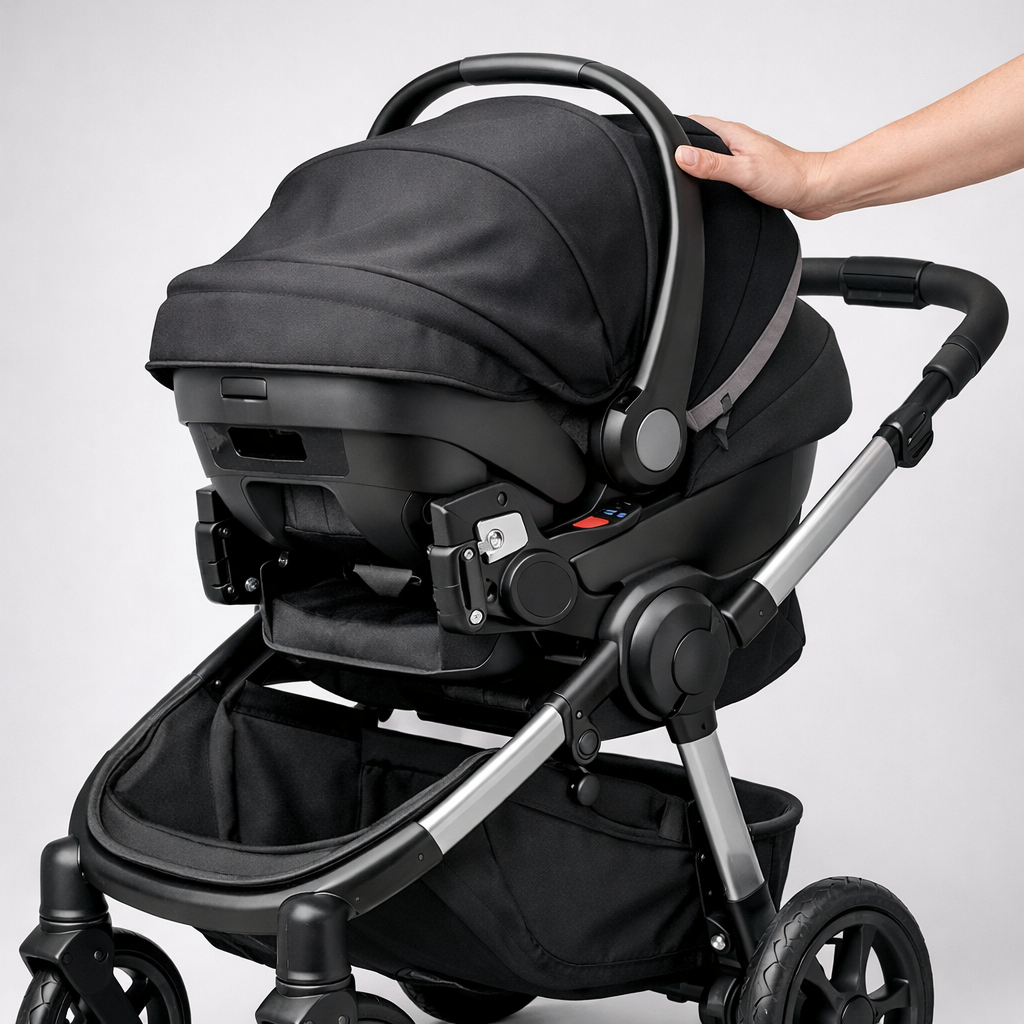
2026 Travel System Picks: Strollers That Include Car Seat Adapters
If you’re hunting for the best 2026 travel systems with car seat adapters, start with bundles that click together straight out of the box. A travel system is a stroller and infant car seat combo designed to click together for seamless transfers, often via built-in or included adapters. Typical bundles run $350–$1,200, and stroller-only weights average 25–30 lbs, which matters when you’re lifting in and out of trunks. Choosing a stroller car seat combo that’s ready on day one means fewer parts to buy and a safer, simpler routine with a newborn. Below, I highlight the travel systems that include adapters or have native connections—and how to verify infant car seat compatibility before you check out.
A Day in Mollywood
I’ve been writing about baby gear since 2006, and I still remember the gear overwhelm—especially trying to move a sleeping baby without waking them. What finally worked for me: a newborn-ready stroller that fit my tiny trunk and a seat I could pop in and out one-handed on our apartment stairs. My goal here is safety-first, real-life ease for tired parents. At A Day in Mollywood, that translates to clear, no-fuss picks you can use on day one—without extra parts or guesswork.
How I chose these travel systems
I prioritized independent safety and usability data, along with hands-on parent practicality. Consumer Reports evaluates stroller ease and maneuverability and crash protection/vehicle fit for infant seats, and it tested 18 travel systems for 2026; its Top Picks reflect those lab findings and real-world use patterns (see Consumer Reports’ travel system testing and top picks). Models here either ship as a bundle or include/engineer adapters for the paired infant seat, offer clear compatibility paths, and strike sensible price-to-feature tradeoffs. At A Day in Mollywood, I favor systems that cut clutter and decision fatigue while meeting safety benchmarks.
Quick-compare table (weights are approximate where brands vary by trim/config):
| Model | Who it’s for | Adapter included | Seat install type (base/baseless) | Stroller weight | Expandability | Price range | Notable tradeoff |
|---|---|---|---|---|---|---|---|
| Nuna TRIV lx + PIPA urbn | City families wanting a premium, compact, newborn-ready stroller | Native interface/engineered integration | Baseless LATCH built into carrier; seat-belt install optional | Light (~<20 lb) | Single | Premium (~$1,300 bundle) | Pricey; smaller basket |
| Nuna SWIV + PIPA Aire RX | Safety-and-usability seekers who want smooth transfers | Engineered adapters included for paired seats | Base (RELX) standard; baseless-capable with seat belt | Midweight (low–mid 20s lb) | Single | Premium | Larger fold than ultra-compacts |
| UPPAbaby Vista V3 + Mesa/Aria | Growing families who may expand to double | Native seat fit (no adapter for Mesa/Aria) | Base standard; baseless-capable with seat belt | Heavier (~27–30 lb) | Expands to 2–3 kids with accessories | Upper mid–premium (Vista ~$999.99) | Bulk and cost |
| Graco Modes Pramette + SnugRide | Budget-focused, car-dependent first-time parents | Native seat fit (matching SnugRide) | Base standard; baseless-capable with seat belt | 25.8 lb | Single | Value (~$300) | Basic suspension; larger footprint |
| Britax Willow Brook + Willow/Brook | Ease-first caregivers who want simple installs and cleanable fabrics | Native seat fit; confirm base/adapters in box | ClickTight base; baseless-capable | Mid-20s lb | Single | Midrange | Infant seat height/weight limits |
| Maxi-Cosi Zelia travel system | Everyday errand runners who value easy fold/steer | Native seat fit (bundle) | Base standard; baseless-capable | Mid-20s lb | Single | Midrange | Attachments can feel uncertain; assembly time |
Sources: typical price/weight context (see TeachToddler’s 2026 stroller overview), Consumer Reports’ 2026 testing methodology and picks, retailer roundups noting what’s in the box.
Nuna TRIV lx + PIPA urbn
Why it stands out: a premium, newborn-ready, urban stroller that minimizes bulk without sacrificing day-one convenience. Bambi Baby names it the Best Overall Travel System of 2026, with the TRIV lx + PIPA urbn bundle shown around $1,300 and the PIPA urbn itself listed near $750; the urbn’s baseless installs are a huge perk for ride-shares and tight city parking (see Bambi Baby’s 2026 travel system picks). The urbn integrates rigid LATCH connectors into the carrier so you can secure the seat without a separate base, then click it to the TRIV’s engineered interface—fewer parts to track, faster transfers. Always verify “what’s in the box” at checkout to confirm adapters and accessories for your exact trim.
Who it’s for: parents prioritizing a premium travel system, quick baseless infant car seat use, and a nimble urban stroller that still handles daily errands.
Pros
- Baseless infant car seat simplifies taxis and secondary cars
- Light, compact frame; smooth one-handed operations
- Engineered integration reduces aftermarket adapter needs
Tradeoffs
- Pricey bundle
- Smaller storage basket than full-size frames
Nuna SWIV + PIPA Aire RX
Consumer Reports named this pair a 2026 standout based on safety, usability, and maneuverability lab tests for strollers—and crash protection/vehicle fit for infant seats (see CR’s Top Picks for Travel Systems). The SWIV’s seat coupling is smooth, with a one-hand release that helps preserve sleepy transfers. Adapters for the paired PIPA Aire RX are engineered/included, and daily use perks—like an easy carry and intuitive fold—lower mental load when you’re juggling bags and bottles.
Who it’s for: families who want a safety-forward bundle with polished handling and stress-free seat clicks.
Pros
- Strong lab performance on safety and ease
- One-hand seat release; intuitive stroller controls
- Premium materials without feeling overly bulky
Tradeoffs
- Pricier than value systems
- Larger folded size than ultra-compact travel strollers
UPPAbaby Vista V3 + Mesa or Aria
Parents choose the Vista for its big under-basket, sturdy push, and expand-to-double frame that can ultimately carry up to three children with accessories. The stroller is listed at $999.99, often before adding seats or accessories (see Bambi Baby’s pricing snapshot). With Mesa/Mesa V2/Aria infant seats, attachment is typically native—no extra car seat adapter required—and the frame can add a second seat later. If you’re planning siblings close together, that expandability is a big help; just confirm model-year specifics and configurations at purchase (see NINI and Loli’s overview of expand-to-double travel systems).
Who it’s for: families planning for two; suburban errands that need storage; those wanting native seat fit.
Pros
- Expands to double and supports a ride-along board
- Native connection with Mesa/Aria simplifies setup
- Excellent storage capacity
Tradeoffs
- Heavy and bulky for tight trunks or frequent stairs
- Costs climb with second-seat accessories
Graco Modes Pramette with SnugRide
A strong value pick that often works seamlessly with matching SnugRide seats—no third-party adapters to track. Typical price hovers around $300, stroller weight is 25.8 lbs, and the reversible seat converts to a lie-flat pram mode for newborn strolls (see TeachToddler’s 2026 stroller guide). For value context, Mommyhood101’s testing also highlights budget-friendly Graco systems among its top performers (see Mommyhood101’s best travel systems roundup).
Who it’s for: budget-focused families, car-dependent routines, and first-time parents who want simple, compatible pieces.
Pros
- Affordable bundle with native seat fit
- Lie-flat pram mode without buying a bassinet
- Widely available replacement parts and service
Tradeoffs
- Basic suspension; not the smoothest on rough sidewalks
- Heavier and bulkier than compact city frames
Britax Willow Brook with Willow or Brook
This system leans into ease-first features that make newborn life simpler. The Willow infant seat pairs with a ClickTight base for secure, straightforward installation; the stroller includes an expansive UPF50+ canopy, Greenguard Gold–certified fabrics, and machine-washable touches. Note infant seat limits (often around 22 lbs/29 inches), which some babies outgrow quickly (see Forbes’ best travel system stroller guide). Attachment is designed to be straightforward—just confirm whether the base and any adapters are included in your box.
Who it’s for: caregivers who value foolproof installs and easy-to-clean fabrics.
Pros
- ClickTight base reduces install errors
- Sun-safe canopy and low-VOC materials
- Simple, native attachment within the system
Tradeoffs
- Lower infant seat limits than some competitors
- Heavier than minimalist travel strollers
Maxi-Cosi Zelia travel system
Balanced, everyday usability with some setup caveats. Testers praise its easy folding and maneuverability, but initial assembly can take about 45 minutes and early attachments may feel uncertain until you learn the “click” (see Mommyhood101’s notes on the Zelia). Bundles pair the seat and stroller to work together, so you’re not chasing third-party adapters; do a quick alignment check before first use to ensure secure connections.
Who it’s for: parents who want an easy push and compact fold on a midrange budget.
Pros
- Smooth steering; compact fold
- Native seat pairing in the bundle
- Good value in the midrange
Tradeoffs
- Longer assembly time
- Attachment confidence improves with practice
What to know about adapters and compatibility
A car seat adapter is a connector that lets a stroller frame securely accept an infant car seat. Some systems have built-in interfaces; others include brand-specific adapters in the box. Always confirm your seat and stroller models are officially compatible.
Key points to keep you sane and safe:
- Premium brands increasingly use native connections or include brand adapters (for example, Mesa seats on the Vista), while modular frames may sell adapters separately—check “what’s included” before you buy (see Bambi Baby’s box-contents callouts).
- Independent labs advise prioritizing infant seat crash protection and vehicle-fit clarity first; once safety is covered, choose the stroller interface that fits your life (see Consumer Reports’ testing focus).
- Three-step verification: check the manufacturer’s compatibility chart; confirm whether adapters are included vs. sold separately; if possible, do a test click-in at a store before purchase. If you drive a small car, our small-car infant seat fit guide can help you pre-screen options. On A Day in Mollywood, we stick to official compatibility charts and manuals to avoid risky workarounds.
Safety and real-life use tips
- Use independent ratings to shortlist: Consumer Reports evaluates crash protection, vehicle fit, and stroller ease/maneuverability—let those scores guide you. We weigh our picks against these scores at A Day in Mollywood.
- Baseless installation secures the infant car seat directly to the vehicle using integrated LATCH or seat belt paths, without a separate base. It’s useful for taxis, ride-shares, or secondary cars. Always follow the seat manual and confirm a tight, correct-angle install (see NINI and Loli’s travel system guidance).
- Street smarts: measure your trunk and compare to folded dimensions; practice a one-handed seat release at home before the first outing; look for UPF50+ canopies for sun; and remember total carry weight (stroller + seat) when navigating stairs.
Buying checklist for busy parents
- Confirm if adapters are included or sold separately; double-check the exact infant seat model bundled.
- Check vehicle fit and installation type (base vs. baseless LATCH), and skim the vehicle/seat fit guide before you buy.
- Test maneuverability, fold, and weight; typical stroller-only weights run about 25–30 lbs, which adds up with a loaded diaper bag.
- Consider expandability if you may add a second seat or ride-along board within two years.
- Cross-check independent lab ratings—Consumer Reports tested 18 travel systems for 2026 to identify strong safety/usability performers.
Price reality check: Most bundles fall between $350 and $1,200, while value options like the Graco Modes Pramette often hover around $300.
Frequently asked questions
Do I need a car seat adapter or is it built in?
Many systems include a native connection; others need brand-specific adapters sold separately—check the box contents and the official compatibility chart, or our A Day in Mollywood guides for quick confirmation.
Are travel systems safe for newborns to ride in for long outings?
They’re newborn-ready when used with the infant car seat, but limit prolonged time in the seat outside the car. Take breaks for movement and use a flat, fully reclined bassinet for longer strolls when possible.
How can I tell if a car seat will fit my car before I buy?
Check the manufacturer’s vehicle-fit guide and the install method (base or baseless). When possible, test in your car or buy with easy returns to verify angle, tightness, and front-seat clearance; our small-car fit guide on A Day in Mollywood can help you pre-screen.
What’s the difference between a bundled travel system and adding an adapter later?
A bundle ships with a matched stroller and infant seat that click together immediately (our default pick at A Day in Mollywood). Buying a stroller and adding an adapter later can work, but it adds variables—confirm compatibility, availability, and whether the adapter affects fold or stability.
Should I choose a system that can expand for two kids?
If you might add a second child soon, choose a frame that can convert to a double and supports a ride-along board. It’s pricier upfront but often saves money and hassle later for close-in-age siblings.