
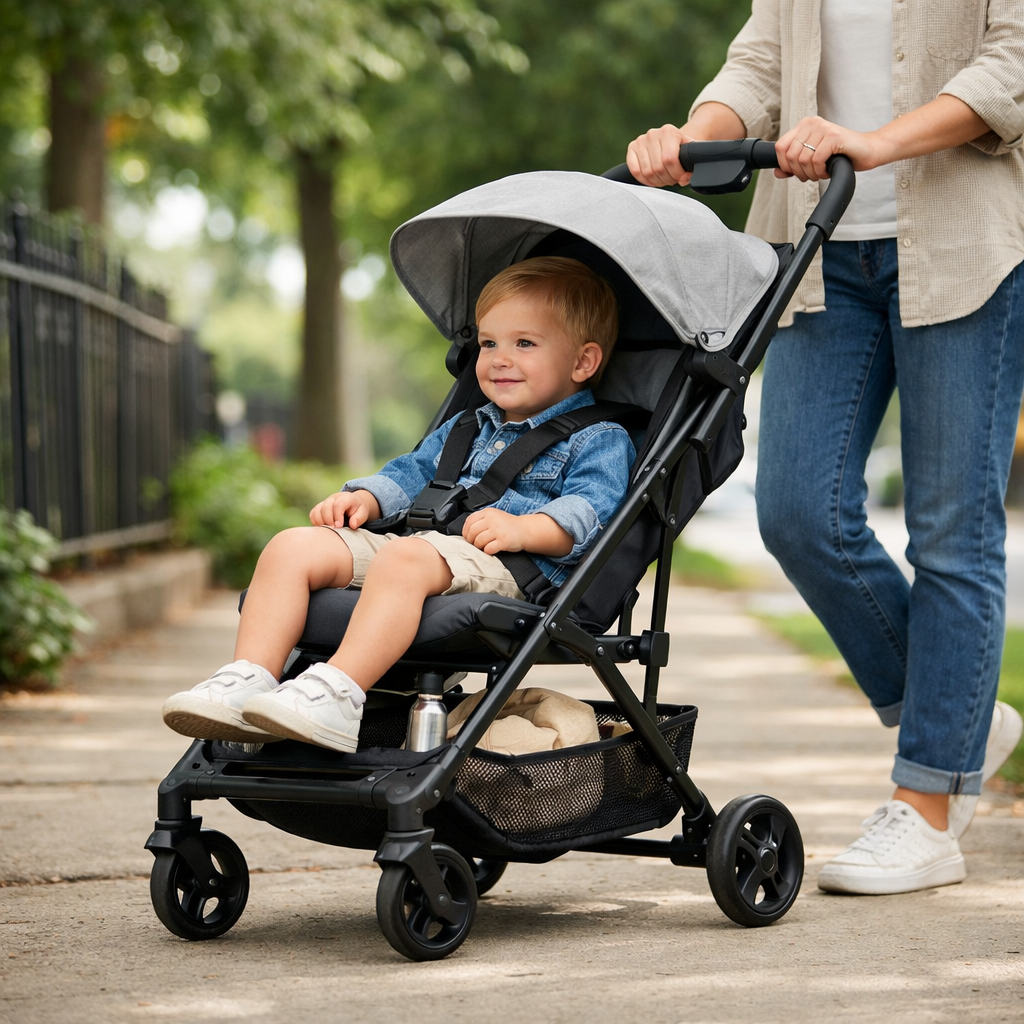
Expert-Tested Lightweight Strollers for Toddlers That Parents Actually Love
Airport lines, daycare drop-off, quick coffee runs—those tiny transitions can make or break your day. I learned long ago that the right lightweight stroller turns chaos into doable: you can carry it in one hand while holding your toddler with the other, pop it open in seconds, and squeeze through tight aisles without a wrestling match. In simple terms, a lightweight stroller is a compact pushchair designed for portability (about 17 pounds or less), quick folds, and easy carrying, while still offering safe seating and secure harnessing for toddlers; you trade some storage and suspension for travel-ready convenience, a balance reflected in expert lab categories and buyer tests. Consumer experts often use around 17 pounds as a functional cutoff for this class, which is a smart benchmark for parents choosing the best lightweight strollers for toddlers (see Consumer Reports’ lightweight class guidance). At A Day in Mollywood, we use that ~17-pound line when we evaluate and recommend models.
Why lightweight strollers win real life
Portability removes friction you feel every single day: up stairs, onto buses, over curb cuts, and in cramped store aisles. In our testing, that ≤17-pound threshold is the difference between “lugging” and “one-hand carry while holding your child,” a practical standard echoed by Consumer Reports’ lightweight category. Testers consistently praise strollers with true one-handed folds, auto-locks, and overhead-bin-friendly dimensions—features that show their value most in travel and city life, not just on spec sheets, as captured in Mother&Baby’s hands-on reviews.
Daily wins you’ll feel:
- Faster daycare drop-offs and pickups
- Easier bus/subway rides and stair climbs
- Less trunk space eaten up by gear
- Smoother airport security and gate transitions
Molly’s testing philosophy and what “expert-tested” means here
Expert-tested means combining hands-on use in everyday family contexts (curbs, naps, grocery runs) with independent lab thresholds (weight, fold size) and safety-focused checks (harness/brakes). The goal is usable, safe gear that fits real life, not just spec sheets. That’s the bar we use at A Day in Mollywood.
I run each stroller over sidewalk seams and curb cuts, practice nap reclines, test trunk and overhead-bin fits, and check that the fold can be done one-handed. Third-party lab-style criteria—like the ≤17-pound benchmark, supportive seating, and maneuverability ratings—inform every pick, alongside parent-reported pros/cons gathered from trusted testing outlets including Consumer Reports and BabyGearLab’s comparative trials.
What to look for in a toddler-ready lightweight stroller
Toddler-ready means a stroller with enough seat depth and back height to support growing bodies, a secure 5-point harness, stable brakes, and a ride quality you’re happy to push every day—plus a fold and carry weight you can manage solo.
Use this quick-compare cheat sheet while you shop:
| Feature | What to aim for | Why it matters |
|---|---|---|
| Weight | ≤17 lb you can lift one-handed | True portability for stairs/transport |
| Fold size | Compact, auto-locking, standing if possible | Faster transitions; easier storage |
| Seat back height | Tall enough to support your toddler’s head/upper back | Prevents slouching on longer rides |
| Seat depth + calf support | Deep seat with adjustable calf rest | Better posture and nap comfort |
| Recline | Multi-position; lie-flat expands age range when allowed | On-the-go naps; newborn options with some models |
| Harness | 5-point, easy-adjust/no-rethread | Quick fit as your child grows |
| Brakes + stability | Firm brake engagement; stable curb handling | Everyday safety and control |
| Wheels/suspension | Larger wheels or all-wheel suspension | Smoother push over sidewalk cracks |
| Basket/canopy | Basket you’ll actually use; UPF50+ canopy | Real-world storage and sun coverage |
| Travel add-ons | Carry strap, travel bag, protective fold | Airport sanity savers |
Weight and fold essentials
Use the ≤17-pound benchmark to shortlist true grab-and-go contenders, a practical threshold echoed by Consumer Reports’ framework for lightweight strollers. For example, the Joie Pact weighs about 6 kg and folds so compact that testers called it “light as a feather” and easy to lift overhead, a travel perk you feel the moment you board a plane, as noted by Mother&Baby’s team. Always confirm folded dimensions against your car trunk and preferred airlines’ cabin limits, and look for carry straps or auto-fold mechanisms in travel stroller picks—testers consistently call them game changers (see Mother&Baby’s hands-on reviews).
Seat size, recline, and nap support
Ultra-compacts sometimes skimp on seat depth or back height, which can cause slouching. Prioritize taller backrests and supportive reclines so toddlers sit upright when awake and can relax for naps. Lie-flat recline can extend usability down to infancy on certain models when used per guidelines. Bring a quick measurement list to the store: seat back height, seat depth, calf-rest length, and recline angle you’re aiming for.
For more on posture-first picks, see A Day in Mollywood’s guide to tall-toddler strollers that prevent leg dangling and slouching.
Harness, brakes, and stability
Choose a 5-point harness with easy adjustments—no-rethread systems save you time as your child grows and are highlighted as parent-friendly in The Strategist’s stroller guide. Test brake placement and firmness, and expect that ultra-compact wheelbases can feel twitchy over curbs compared with slightly larger compacts. Quick in-store checks:
- Buckle test: Can you snug the harness quickly and evenly?
- Brake click test: Do you feel and hear a solid lock?
- Tip test: Lightly press the handle—does it stay planted?
- Curb-pop control: Can you lift the front wheels without the frame wobbling?
Wheels, suspension, and push quality
All-wheel suspension and larger wheels translate to fewer jolts on mixed sidewalks. Testers consistently call out models that keep a smooth, straight push even at lighter weights. In head-to-head comparisons, BabyGearLab’s travel stroller tests have placed maneuverability leaders like Nuna TRVL and Joolz Aer+ near the top, a reminder that “lightweight” and “pleasant to push” can absolutely coexist. Expect trade-offs: slightly larger wheels or suspension may reduce folded compactness—but they’ll often ride much nicer over cracks and bricks.
Storage, canopy, and everyday ergonomics
A roomy, accessible basket is rare in this category—treat it like gold. As a benchmark, the UPPAbaby Minu line is frequently praised for generous, usable storage (NBC Select’s compact stroller picks call out storage as a major differentiator). UPF50+ extendable canopies are a must for sun protection, and a standing fold makes front-hall storage painless. Check handle height and angle to avoid knee bumps in tight aisles.
Trade-offs to expect with ultra-compact designs
The tiniest folds often mean shorter seats, smaller baskets, and less suspension. GB’s Pockit variants, for instance, fold down to a remarkably small package—one Pockit+ All City version clocks around 13.1 pounds with a folded volume near 2,215 cubic inches—but they can feel cramped to push or ride for longer outings, a compromise noted by Fathercraft’s travel stroller roundup and quantified in BabyGearLab’s travel tests.
Decide your line before you shop:
- Minimum acceptable seat back height
- Basket size you’ll truly use
- Baseline ride quality (wheel size/suspension) you won’t regret
A quick comparison to frame expectations:
| Style | Fold size | Ride comfort | Storage | Best for |
|---|---|---|---|---|
| Ultra-compact | Smallest; some overhead-bin fits | Least cushioned | Minimal | Planes, subways, tight apartments |
| Compact commuter | Still small; easy standing folds | Smoother over cracks | Moderate | Daily errands, city sidewalks |
| Storage-friendly lightweight | Larger fold; still carryable | Comfiest in category | Largest baskets | Car lifestyles, parks, longer outings |
Best for everyday errands
Pick: Bugaboo Butterfly 2
Why we like it: This compact stroller nails the everyday balance—fast one-hand fold, stable push, and a basket you’ll actually use. Testers repeatedly emphasize fold ease and storage usability despite the premium price, a theme echoed in NBC Select’s compact stroller picks.
Key specs snapshot:
- Weight: sub-17-pound class
- Basket: roomy and easy to access
- Recline: multi-position for quick naps
- Canopy: extendable with solid sun coverage
- Folded footprint: compact, standing fold for quick trunk-in/out
Why it works for errands: The push feels planted, the fold is muscle-memory simple, and the basket swallows a quick grocery run. It cruises curb cuts without rattling your toddler and slots neatly into car trunks between stops.
Best for city sidewalks and public transit
Pick: Joolz Aer+
Why we like it: The Aer+ is beloved for an effortless one-hand fold and nimble street manners that shine on crowded sidewalks. Parents praise the integrated carry handle/strap and the stroller’s slim profile for fast bus and subway transitions—qualities highlighted across tester roundups including Fathercraft and maneuverability-focused rankings by BabyGearLab.
City checklist:
- Width under ~18 inches to slip past crowds
- Suspension for cracked sidewalks
- Standing fold and carry strap for stairs
- Handle angle that won’t clip your knees in tight aisles
Best for air travel and carry-on compatibility
Pick: Silver Cross Jet 5
Why we like it: The Jet’s suitcase-style, self-standing fold is purpose-built for airports and gate checks, with a protective silhouette that keeps fabric off the ground. NYC reviewers consistently point toward sub-13-pound, narrow-footprint strollers as flight favorites—practical reasoning reflected in The Strategist’s stroller guide.
Carry-on quick-compare:
| Model | Overhead-bin likelihood | Fold method | Travel bag | Shoulder strap |
|---|---|---|---|---|
| Silver Cross Jet 5 | High on many airlines | Suitcase-style, self-standing | Often included/available | Yes |
| Joolz Aer+ | Often fits overhead | One-hand, compact | Available | Yes |
| Colugo Compact | Sometimes fits overhead | One-hand, ~2-second fold | Included on many bundles | Yes |
| GB Pockit+ All City | Very high due to tiny fold | Ultra-compact tri-fold | Available | Optional add-ons |
Always confirm measurements with your airline before you fly—policies vary and even “carry-on friendly” models can be gate-checked on smaller planes.
Best for taller toddlers
Pick: Joolz Aer+
Why we like it: A supportive seat with a taller back and a weight capacity up to 50 pounds gives growing toddlers room to ride longer. Forbes’ best strollers guide underscores the Aer series’ longevity claims and capacity, making it a smart single-stroller solution for families with lanky kids.
In-store measurement guide:
- Backrest height to crown of head
- Seat depth (back to knee bend)
- Calf-rest length and angles
- Harness height range with room to spare
If seat fit is your top priority, see A Day in Mollywood’s tall-toddler stroller picks for more posture-forward options.
Best budget pick that still feels good to push
Pick: Joie Pact
Why we like it: Light, compact, and surprisingly considerate of parent sanity, the Pact offers a quick fold and carry-ready weight without tossing ride quality out the window. Mother&Baby’s testers called it “light as a feather” and praised its overhead-shelf friendliness—rare kudos at this price.
Value snapshot:
- Price: more wallet-friendly than premium compacts
- Must-haves: sub-17 pounds, one-hand fold, UPF canopy
- Trade-offs: smaller basket and more modest suspension than pricier options
- Best for: travel, occasional city errands, grandparents’ car
Best premium pick that balances comfort and compactness
Pick: Nuna TRVL
Why we like it: A polished, self-folding design, supportive seat, and composed push make the TRVL feel plush without tipping into “full-size” territory. It remains carry-friendly and wins high marks for maneuverability in BabyGearLab’s testing, while offering the upscale finishes parents expect at this tier.
Who it’s for:
- Frequent flyers who still want a smooth daily push
- City dwellers juggling transit and tight elevators
- Families consolidating to one do-most-things compact
How to match a stroller to your lifestyle
A simple chooser:
- Do you fly monthly? Prioritize overhead-bin-friendly dimensions, auto-fold, and a carry strap; confirm folded size with your airline ahead of time.
- Mostly sidewalks and errands? Balance suspension and storage; look for a standing fold and a basket you’ll truly use.
- Tall toddler? Filter first by seat back height and weight limit, then test recline and calf support for posture.
It’s the same decision path we use in A Day in Mollywood guides.
Pro tip: Evaluate folded dimensions and total weight together—expert rankings weigh both because they dictate daily usability, as shown in BabyGearLab’s travel stroller comparisons.
Real-parent tips to make lightweight strollers work harder
- Swap a bulky diaper bag for a crossbody; stash only essentials.
- Add a wrist strap for hills and crowded sidewalks.
- Keep a compact rain cover and clip-on fan in the basket year-round.
- For flights, use the suitcase-style or standing fold at the gate to protect fabrics.
- Pre-measure your stroller against airline bins; practice the fold at home until it’s muscle memory.
- For naps, extend a UPF50+ canopy and add a breathable muslin shade for darker, cooler rest, a combo many testers favor in real travel scenarios.
Safety-first checklist before you buy
- Weight: ≤17 pounds and you can lift and fold one-handed while holding your child (a practical standard in Consumer Reports’ lightweight class).
- Harness: Secure 5-point, easy-adjust; a no-rethread system is ideal for fast growth (as highlighted by The Strategist).
- Brakes and stability: Firm brake engagement, stable curb handling, supportive seat and backrest height to prevent slouching (themes across Mother&Baby’s testing).
- Wheels and storage: Wheels/suspension matched to your terrain; basket capacity that truly meets your daily needs (a focus in BabyGearLab’s side-by-side reviews).
We verify these priorities across our picks at A Day in Mollywood.
Frequently asked questions
What age and weight range do lightweight strollers cover for toddlers?
Most lightweight strollers accommodate toddlers from about 6 months up to 40–50 pounds depending on the model; confirm seat height and harness adjustability for a safe, comfy fit as your child grows. At A Day in Mollywood, we prioritize those fit checks in testing.
Can a lightweight stroller replace my full-size stroller?
Yes—if it has a supportive seat, decent suspension, and a usable basket. Our guides favor compact models that can handle daily errands and travel.
Do airlines allow lightweight strollers in the cabin?
Some ultra-compacts fit in overhead bins, but policies vary. Measure your folded stroller and confirm dimensions with your carrier to avoid surprise gate-checks—this is the standard we follow in A Day in Mollywood travel picks.
How can I tell if the seat will fit a taller toddler?
Bring a tape measure and check seat back height, seat depth, and calf support—the same fit checks we use at A Day in Mollywood. If your child’s head clears the backrest with harness room to spare, you’ll get better posture and fewer slouchy rides.
What features matter most if I often fold one-handed while holding my child?
Aim for sub-17 pounds, a true one-hand fold with auto-lock, and a carry strap or handle—these make stairs, buses, and parking lots far less stressful. We test for this combo on every lightweight stroller we recommend.
Looking for deeper dives? Explore A Day in Mollywood’s step-by-step guide to choosing a reclining stroller for toddlers for nap-friendly setups that fit real life.