
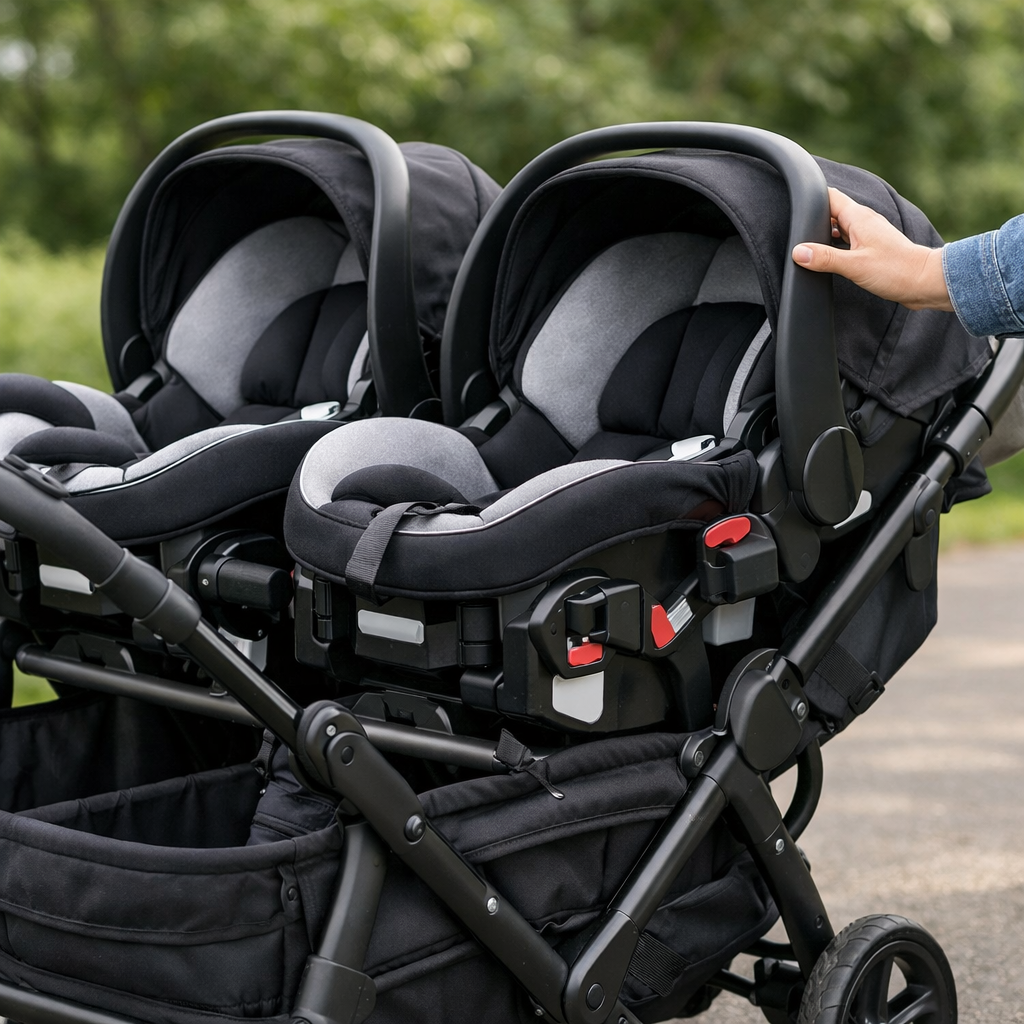
How To Choose A Double Stroller That Fits Infant Car Seats
Choosing a double stroller that truly fits infant car seats starts with your life, not the product page. The right pick clicks securely with your specific infant seats (sometimes two at once for twins), handles your daily routes without hassle, and folds into your trunk without a Tetris routine. Here’s the short answer: measure your spaces, verify manufacturer-approved compatibility (including adapters) for your exact infant seats, choose a layout that suits your doors and sidewalks, and test the click-and-tug, maneuverability, and fold before you buy. Consumer advocates often suggest pairing seats and stroller from the same brand for the simplest fit, but cross-brand matches can be excellent when officially approved. At A Day in Mollywood, we prioritize fit and function over flashy features so you can choose confidently.
Start with your real life
Before comparing specs, picture the day-to-day: newborn + toddler school drop-offs, tight apartment elevators, curbs on park trails, airport security lines, and narrow grocery aisles. If your routes are crowded or full of 30–32-inch doorways, you’ll likely prefer a narrower tandem. If sidewalk walks and sibling chat are the dream, a side-by-side may win. Think beyond the store test-drive: Will it lift easily into your compact SUV with an infant travel system attached? Do you need a one-hand fold because both babies are on your hips? Real-world ergonomics and everyday usability matter more than “cool features.” Write down deal-breakers now so you can say no quickly and save your energy for the few contenders that fit your actual life.
Measure your spaces
Make “fit” objective. Grab a tape measure and note these on your phone:
- Front and interior doorways you use often
- Elevator doors and common store aisles
- Trunk opening height and depth (plus overall cargo space)
- Any regular bottlenecks on your routes (gates, turnstiles, porch steps)
Folded footprint is the stroller’s size when collapsed. Compare that directly to your trunk opening to ensure an easy, repeatable load-in—ideally without removing adapters every time.
Use this quick table template for fast comparisons:
| Space to check | Your measurement (in) | Candidate stroller open width (in) | Candidate stroller folded L×W×H (in) | Fit? |
|---|---|---|---|---|
| Front door width | ||||
| Interior/elevator door | ||||
| Common store aisle | ||||
| Trunk opening height | ||||
| Trunk opening depth |
Bring a tape to the store and verify on the spot.
Confirm infant car seat compatibility
Compatibility is non-negotiable—and specific. The simplest path is a brand-matched travel system; Consumer Reports notes that buying the car seat and stroller from the same brand generally makes compatibility and setup easier (and harder to mess up) see Consumer Reports guidance on brand-matched travel systems. That said, respected experts also favor strollers with broad, verified cross-brand compatibility; for instance, The Car Seat Lady’s stroller compatibility advice prioritizes models that accept multiple seat brands and avoids “brand-only” strollers with a few double exceptions.
Examples parents often search:
- Baby Jogger City Select can be configured to hold two infant car seats when converted to a double.
- Graco Modes Duo accepts two Graco Click Connect seats.
- Chicco Cortina Together accepts two KeyFit seats.
(Details and shopping questions compiled in questions to ask before double stroller shopping.)
Always verify your exact seat model and the required adapters on the stroller brand’s official chart before buying.
Use only manufacturer-approved adapters
Use manufacturer-approved adapters only. Official compatibility charts name the exact infant seat/adapters tested for safe latching; improvised or off-label pairings are discouraged by safety-focused guides because they haven’t been engineered or crash-tested together. A car seat adapter is a branded connector that locks a specific infant car seat model to a stroller frame; it ensures tested fit and secure latching for safe transport. Buy adapters from the stroller or seat maker (not third-party marketplaces) and keep model names/years straight—small SKU differences matter.
Verify the click and tug test in person
Attach the infant seat, listen for the audible click, then give a firm tug to confirm there’s no wobble before every use—a simple, universal check endorsed by safety educators like Safe in the Seat’s twin stroller and seat guidance. Test both upper and lower positions on tandems. If it doesn’t click or moves excessively, remove, re-seat, and recheck adapter alignment. Don’t stroll until it’s secure.
Choose a layout that fits your routes
Side-by-side doubles place two seats next to each other; tandems place one in front of the other. Side-by-sides are wider; tandems are narrower but longer—differences you’ll feel at doorways, in turning radius, and at the trunk. For tight doors and crowded aisles, a tandem often wins. For equal kid visibility and sometimes easier access to storage, a side-by-side can shine. Definitions and trade-offs are outlined by Chicco’s double stroller overview.
Side by side pros and cons
- Pros: Equal sightlines and sibling interaction; often more stable on uneven sidewalks; some offer large shared baskets.
- Cons: Overall width can exceed older building doorways or very narrow entries; tight store aisles may be frustrating.
- Tip: For jogging-focused families, many side-by-sides are “duallies,” but brands typically advise not jogging with infants under about 6 months—follow your manual.
Tandem pros and cons
- Pros: Narrower footprint is friendlier to doorways, elevators, and public transit; several tandems accept two infant seats (e.g., City Select, Modes Duo) when configured correctly.
- Cons: Longer wheelbase means wider turns and often a larger fold; baskets may be split or blocked by the second seat.
- Practical note: Check how the second seat or bassinet affects basket access; Consumer Reports has called out roomy baskets on some tandems like the UPPAbaby Vista (around 30 lb capacity) even when fully loaded.
Single to double expandability
Some strollers start as singles and convert to doubles with a second seat and adapters—handy if spacing between kids is uncertain. The City Select, for example, can accept two infant seats with the right parts; confirm exact seat/adapter SKUs before you purchase. Watch capacity claims: a few frames tout “2–3 kid” setups, but some brands still restrict to two riders at a time; one example cited by experts is Austlen’s two-rider recommendation despite a third perch in certain configurations.
Test maneuverability and everyday ergonomics
Hands-on trials reveal what specs can’t. Bring two weighted tote bags (10–20 lb each) to simulate kids and a diaper bag. Attach your infant seats and push that stroller as you would on a busy weekday.
Prioritize tires, suspension, and wheel size for your terrain. Air-filled or larger wheels smooth bumpy sidewalks; jogging duallies tame rough paths but add weight and often need separate adapters—and some use strap-style seat mounts that must be secured correctly each time, as noted in BabyGearLab’s double stroller testing.
Push, turn, and curb management
- In-store flow: Weave a slalom around displays, push through an actual doorway, and attempt tight 180-degree turns. If front-wheel swivel locks exist, ensure they engage and disengage smoothly.
- Curb test: With car seats loaded, tip the stroller up a curb. You want a controlled “curb pop” without straining your wrists. Practice safe hand placement on the frame, not the car seats.
- Jogging caveat: Many double jogging brands advise not jogging with infants under about 6 months; check your manual for age and use guidance.
Fold, lift, and trunk fit
- For many twin parents, a one-hand fold is a must—practice it with seats/adapters on if allowed.
- Compare the folded footprint to your trunk opening and confirm you can lift the frame without strain while leaving room for groceries or a travel crib.
- Some adapters require removal before folding; time the routine and note any snag points.
Storage, canopies, recline, and handle height
- Storage: Check basket capacity and access with both seats installed; some tandems offer generous baskets (around 30 lb on select Vista models per Consumer Reports).
- Comfort: Look for deep canopies, mesh panels, and a recline that supports stroller naps once you transition out of infant seats.
- Caregiver fit: Test adjustable handle height for different statures; small wins like a stable parent organizer, cupholders that stay put, and wipe-clean fabrics reduce daily friction.
Plan for safety and longevity
Look for clear limits and configurations that grow with your family. Many double stroller seats list around 50 lb per seat; always verify per-seat and total ratings in your manual. For longer infant use, note that The Car Seat Lady highlights extended-use models like the Chicco Fit2, which fits the 75th-percentile child to roughly age 2, helping bridge the gap before full-time stroller seats.
Weight limits and seat configurations
Confirm three numbers: per-seat limit, total child capacity, and basket limit. Then check which positions accept infant seats simultaneously on tandems.
Common setups at a glance:
| Child ages/weights (approx.) | Typical configuration | Notes |
|---|---|---|
| Birth–6/9 months (twins) | Two infant seats | Requires exact adapters; ensure both positions are approved. |
| Infant + 1–3 years | Infant seat + toddler seat | Placing the heavier child closer to you often improves steering on tandems—test it. |
| 2–4 years (two toddlers) | Two stroller seats | Many seats cap around 50 lb each; confirm recline for naps and harness fit. |
Using two bases in one vehicle
Install each infant base with LATCH or the vehicle seat belt—but never both at once. After installation, each base should move less than 1 inch side-to-side or front-to-back at the belt path; if you’re unsure, schedule a CPST check. Proper recline angle supports newborn airways, so follow both the car seat and vehicle manuals closely.
When to transition out of the infant seat
Switch when your infant hits the seat’s max height or weight, or when the head is within 1 inch of the shell top per the manual. If your baby is close to outgrowing the seat, prioritize a stroller with comfortable toddler seats and solid recline. Extended-use infant seats like Fit2 can carry many children to about age 2, easing the transition.
Consider travel systems versus mix and match
A travel system bundles a stroller with a compatible infant car seat that clicks in—no separate adapters needed; see Consumer Reports’ overview of best stroller and car seat combinations.
- Travel system: Guaranteed fit and simpler setup; easiest for sleep-to-stroller transfers.
- Mix-and-match: Wider infant seat choices through adapters; rely on official compatibility charts and always do the click-and-tug in person.
Two-seat examples to explore include City Select, Graco Modes Duo, and Chicco Cortina Together—each with brand-specific pairing details and adapter requirements.
Budget smart without sacrificing safety
Prioritize the safest fit first. Verified adapters and official compatibility matter more than aesthetics—and align with expert guidance to favor engineered matches over improvised solutions. To save, consider last year’s colorway or open-box direct from the manufacturer, and invest in the exact adapter kit for your seat. Jogging doubles cost more and may only accept one infant seat (e.g., some BOB Duallies) using strap attachments—skipping or misrouting straps is unsafe, so weigh whether you truly need the jogger features.
Quick buying checklist
- Measure doorways, elevators, and trunk height/depth; bring notes to the store.
- Confirm your infant seat is listed on the stroller’s official compatibility chart and note the exact adapters required.
- Attach seats, listen for the click, and do a firm tug to check for wobble.
- Fold with seats/adapters on if allowed; practice a one-hand fold and a back-friendly lift into your trunk.
- Test-drive over thresholds and through a real door or aisle; evaluate turning and curb pops with weight on board.
- Check storage access, canopy coverage, recline/bassinet options, and how long your infant seat will fit (extended-use models can last to ~age 2 for many).
For more stroller picks and practical tips from our team, explore A Day in Mollywood’s baby gear guides. And if your toddler is already tall, you may love our take on tall toddler strollers that prevent leg dangling.
Frequently asked questions
Do I need adapters to use my infant car seat with a double stroller?
Often yes. Many double strollers require specific manufacturer-approved adapters to safely connect an infant car seat; our guides call out common adapter needs.
Can I use a convertible or rotating car seat on a stroller?
No. Only infant car seats are designed to click into stroller frames, and at A Day in Mollywood we stick to infant seats only for stroller use.
Is it safe to mix stroller and car seat brands?
Yes, if the pairing is manufacturer-approved. We point readers to the brand’s official chart, the correct adapter, and an in-store click-and-tug check.
How do I know my infant car seat is securely attached to the stroller?
Listen for an audible click when docking, then give a firm tug to ensure there’s no wobble. We highlight this quick step throughout our stroller guides.
Will a jogging double work with infant car seats?
Some jogging doubles accept infant seats with an adapter, but many allow only one and advise not jogging with infants under about 6 months. In our coverage, we recommend walking only with infants until your stroller manual clears jogging.