
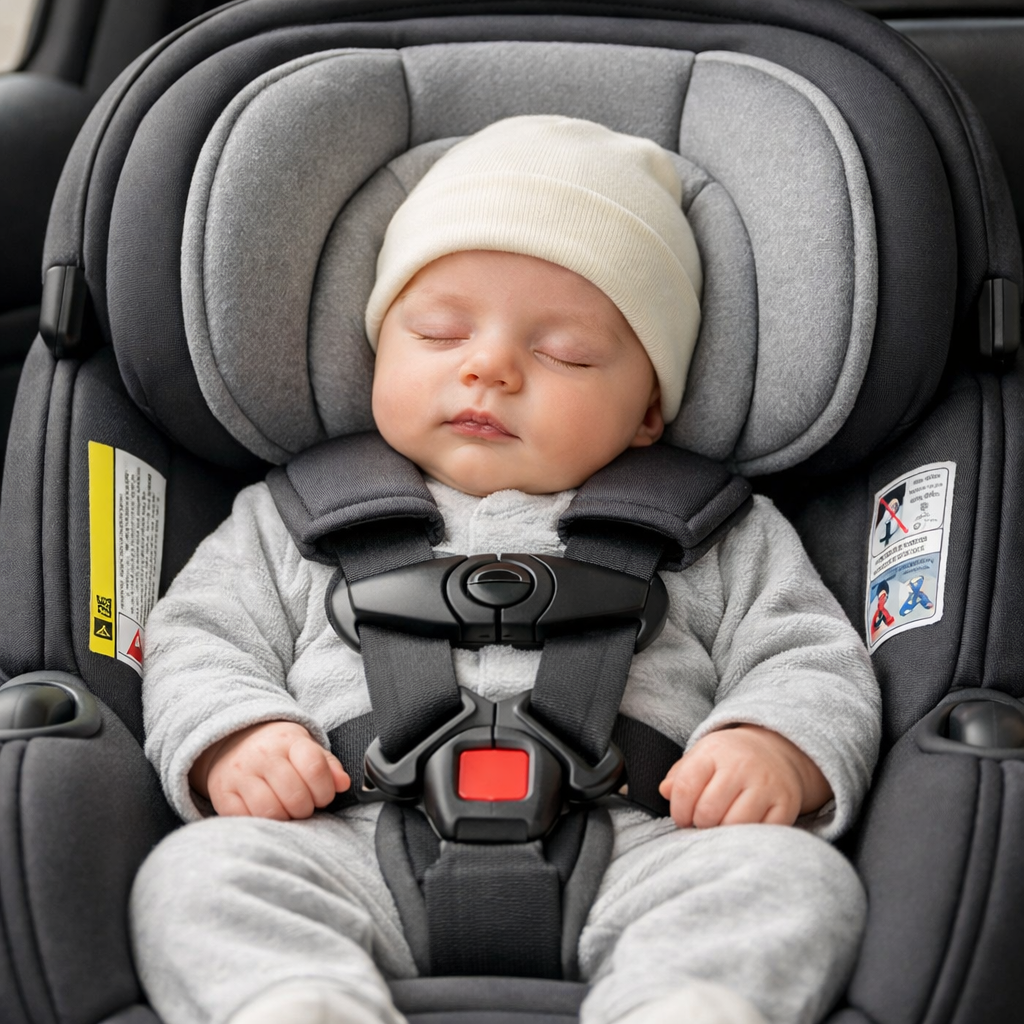
How to Choose an Infant Car Seat with Superior Head Support
Choosing the best infant car seat for newborn head support starts with two realities: rear-facing positioning protects fragile heads and necks, and correct fit prevents chin-to-chest slump. Look for a rear-facing infant car seat with built-in, adjustable head support, clear recline indicators, and an easy, foolproof install. That combination stabilizes your baby’s head in daily drives and in a crash, where the seat shell cradles the head, neck, and spine. If you’re feeling overwhelmed, you’re not alone—this is one place where smart features and a careful setup truly pay off for safety and peace of mind. For a quick primer on safe newborn head position, see The Car Seat Lady’s guidance on newborn head position, which explains why rear-facing cradles and supports a baby’s airway and spine in motion.
Start with rear-facing safety
Rear-facing car seat — A child restraint installed facing the back of the vehicle. In a crash, the seat’s shell absorbs forces and supports the infant’s head, neck, and spine, reducing movement and injury risk. It’s the recommended orientation for babies and young toddlers.
Rear-facing positions best cradle and support an infant’s head and neck, reducing the movement that can injure fragile tissues during a crash (see The Car Seat Lady’s guidance on newborn head position). Pair a rear-facing infant car seat with a thoughtful install to protect both airway and spine from day one.
Choose a seat that matches your baby’s size and your vehicle, then read both manuals cover to cover. To compare ease-of-use and find a good fit, try the NHTSA Car Seat Finder, which sorts seats by your child’s age/size and shows usability ratings.
If you’d like more evidence-based gear talk in a warm, mom-to-mom voice, browse A Day in Mollywood’s safety notes and picks on our car seat tag page.
Understand what real head support looks like
The head support that helps is the kind built into the seat: adjustable headrests and included infant inserts that are crash-tested with that specific model. Skip third-party head props or bands—Safe in the Seat’s newborn head support guidance warns that aftermarket add-ons can interfere with harness fit and even airway safety.
EPS foam — Expanded polystyrene used in helmets and car seats. In a crash, it compresses to absorb energy and reduce the forces transmitted to a child’s head. Many premium headrests and side wings are lined with EPS to improve side-impact protection (more on EPS foam and headrest design).
Expect head support to “grow” with your baby: soft, included newborn cushions at first, shifting to a more structured, adjustable headrest as your child gains head control.
Match the seat to your baby and your car
Check weight and height limits on the box and in the manual, and then cross-check any vehicle installation restrictions in your owner’s manual. NHTSA’s tool is helpful for narrowing options by fit and ease of use.
Test the newborn recline angle in your actual vehicle before committing. If the base sits too steeply, some manuals allow a rolled towel or pool noodle under the base to reach the correct angle—always follow your seat’s instructions.
Use ease-of-use ratings to prioritize a seat you can install and tighten correctly every time. Proper fit equals fewer head slump issues.
Compare crash performance with ease of use
Head Injury Criterion (HIC) — A crash-test measurement derived from head sensor data that estimates the likelihood of head injury. Lower HIC indicates less head force in a test. Federal standards allow HIC up to 1,000, though many brands and labs aim far lower in internal testing.
Independent reviews (including ours) often discuss head sensor data and real-world usability side by side; see BabyGearLab’s crash and usability reviews for examples, and read this crash-test primer on HIC thresholds for context on federal limits and why some brands test beyond minimums. Remember, many injuries stem from misuse and loose installs—so a seat that tightens easily and shows clear recline/level info can be the safer choice for everyday life.
Your comparison worksheet (fill with notes from brand manuals and trusted reviews):
| Seat model | HIC notes (if available) | Side-impact features | Ease-of-use rating | Installation type | Headrest adjustability |
|---|---|---|---|---|---|
| Seat 1 | e.g., “aims below federal limits” | Deep EPS-lined wings | e.g., “high” | Base with LATCH or seat belt | No-rethread, one-hand |
| Seat 2 | Not published | Rigid shell + energy-absorbing headrest | Medium | Seat belt lock-off | Multi-position |
| Seat 3 | Third-party data available | Add-on cushions included (manufacturer-only) | High | LATCH with guides | Pull-tab height adjust |
Prioritize features that prevent head slump
Preventing chin-to-chest positioning is critical for airway safety. Prioritize an adjustable headrest/no-rethread harness, deep side wings with energy-absorbing foam, clear recline indicators with multiple newborn-friendly angles, and installation aids that make a rock-solid install simple.
- Adjustable headrest and harness: grows with baby and keeps the harness at the right height.
- Deep side wings with EPS foam: contains the head without pushing it forward.
- Clear recline indicators: newborn-friendly angles you can verify at a glance.
- Installation aids: level indicators, easy LATCH installation, and anti-rebound features reduce misuse.
Adjustable headrest and harness height markers
Choose a no-rethread harness where the headrest and harness move together, ideally with one-handed adjustment and clear shoulder-height markers. Lab reviewers often highlight pull-tab or squeeze-handle assemblies that make frequent tweaks easy as baby grows.
This adjustability keeps straps at or below the shoulders for rear-facing and maintains supportive head containment from week one to month twelve.
Deep side wings with energy-absorbing foam
Look for deep, close headrest wings lined with energy-absorbing EPS foam to manage lateral forces and keep the head centered without forcing the chin forward. Check that the contact points feel soft but firm and that your baby’s head sits “in,” not “on,” the support.
In-store, assess wing depth, whether the head stays contained on turns, and whether the headrest touches gently without tilting the chin down.
Clear recline indicators and multiple recline positions
Newborns need an angle that prevents the head from tipping forward; make recline checks part of your pre-drive routine. Choose seats with easy-to-read indicators and several newborn-friendly settings, and remember some manuals allow a tightly rolled towel or pool noodle under the base if your vehicle seat angle needs fine-tuning.
Installation aids that reduce misuse
Seek level indicators, clearly marked belt paths, LATCH guides, and bases that limit motion in a crash, such as those with an anti-rebound bar.
Anti-rebound bar — A rigid bar on the car seat base that limits rearward rotation and rebound motion during a crash, helping keep a rear-facing infant’s body and head more stable. Many brands highlight these kinds of safety technologies and anti-rebound features on their safety pages.
Compare LATCH hardware styles while you’re at it. Basic clips can attach quickly in tight spaces, while push-button anchors may release more easily in vehicles with recessed anchors—choose what you’ll use correctly every time.
Install correctly for maximum head protection
A correctly installed base should not move more than 1 inch side-to-side or front-to-back when tested at the belt path, according to major testing and buying guides. Follow both manuals closely, and consider having a CPST check your work for peace of mind.
Try this quick flow the first time you install:
- Place the base on the vehicle seat and set the newborn recline.
- Attach using LATCH or the seat belt per the car seat manual—use only one method unless the manual says otherwise.
- Lean your body weight into the base while tightening to remove slack.
- Check for less than 1 inch of movement at the belt path.
- Confirm the recline indicator is in the allowed newborn range.
Harness fit checks every ride
For rear-facing, keep harness straps at or below the infant’s shoulders and the chest clip at armpit level. A loose harness invites slouching and head fall—use the pinch test at the shoulder and tighten until you can’t pinch any webbing.
Lay clothing flat, remove harness twists, and keep straps on the shoulder points marked on the headrest so support stays centered.
What not to do with head support
Do not use aftermarket head-support pillows, inserts, or head bands that didn’t come with your seat; they aren’t crash-tested with your model and can affect breathing or harness fit. If the manufacturer’s newborn insert seems to push your baby’s head forward, check the manual for the allowed removal timing and re-check recline and harness snugness.
When to get help from a CPST
CPST — A Certified Child Passenger Safety Technician trained to educate caregivers on selecting, installing, and using car seats correctly. They provide hands-on checks, teach best practices, and help troubleshoot fit issues for specific vehicles and children.
Book a CPST if installation feels confusing, your vehicle’s seat angles are tricky, you swap cars often, or head slump persists despite correct recline and harnessing. NHTSA encourages caregivers to consider a CPST check for added confidence. Share your wins and questions with the A Day in Mollywood community on Instagram, Facebook, and Pinterest—we learn so much from each other.
Budget, lifestyle, and travel system considerations
Balance must-have head support features with real-life needs: carrier weight, cleaning ease, stroller compatibility, and the type of LATCH hardware you prefer to use correctly. Many reviewers advise prioritizing ease of correct installation over crash-test bragging rights alone, because consistent correct use is what protects daily—and we agree.
Some brands publicize testing beyond the minimums and enhanced headrest/side-impact structures; treat that as a value-add while you confirm fit, recline range, and usability in your car. Planning to travel soon? Peek at our family travel reflections on A Day in Mollywood for practical rhythms that keep outings calmer.
Step-by-step setup and safety checklist
- Match seat type to your child’s size and your vehicle—read both manuals before you start.
- Choose rear-facing with an adjustable headrest and energy-absorbing side wings for stable head containment.
- Review crash-test notes (HIC/head sensors) alongside ease-of-use ratings from trusted labs.
- Install per the manual; tighten until there’s under 1 inch of movement and verify the recline indicator for newborn use.
- Harness correctly every ride: straps at/below shoulders, snug via the pinch test, chest clip at armpit level.
- Register your seat, consider a CPST check, and replace any seat after a moderate or severe crash.
Troubleshooting mini-fixes:
- Remove harness twists and use your body weight while tightening the base.
- Revisit recline if any chin-to-chest slump appears.
- Move the headrest so harness height stays at or just below the shoulders.
Frequently asked questions
Are aftermarket head supports safe to use?
No—at A Day in Mollywood, we recommend using only the inserts that came with your car seat and following the manual. Third-party head pillows or bands aren’t crash-tested with your seat and can affect breathing or harness fit.
How do I stop my newborn’s head from flopping forward?
Set the correct recline using the indicator, keep straps snug with the pinch test, and place the chest clip at armpit level; if the included insert pushes the head forward, check the manual for removal timing.
Which built-in features matter most for head support?
We look for an adjustable headrest with clear height markers, deep side wings lined with energy-absorbing foam, multiple recline settings, and installation aids like level indicators or an anti-rebound bar.
When should I remove the newborn insert?
Follow your manual exactly—many inserts are only for smaller babies and should be removed at a specific weight or height; if it causes chin-to-chest positioning, confirm the allowed removal guidance.
Can I use a secondhand infant car seat?
Only if you know the full history, it’s never been in a crash, isn’t expired, and includes the manual and all parts. If any of that is uncertain, we choose a new seat for safety.