
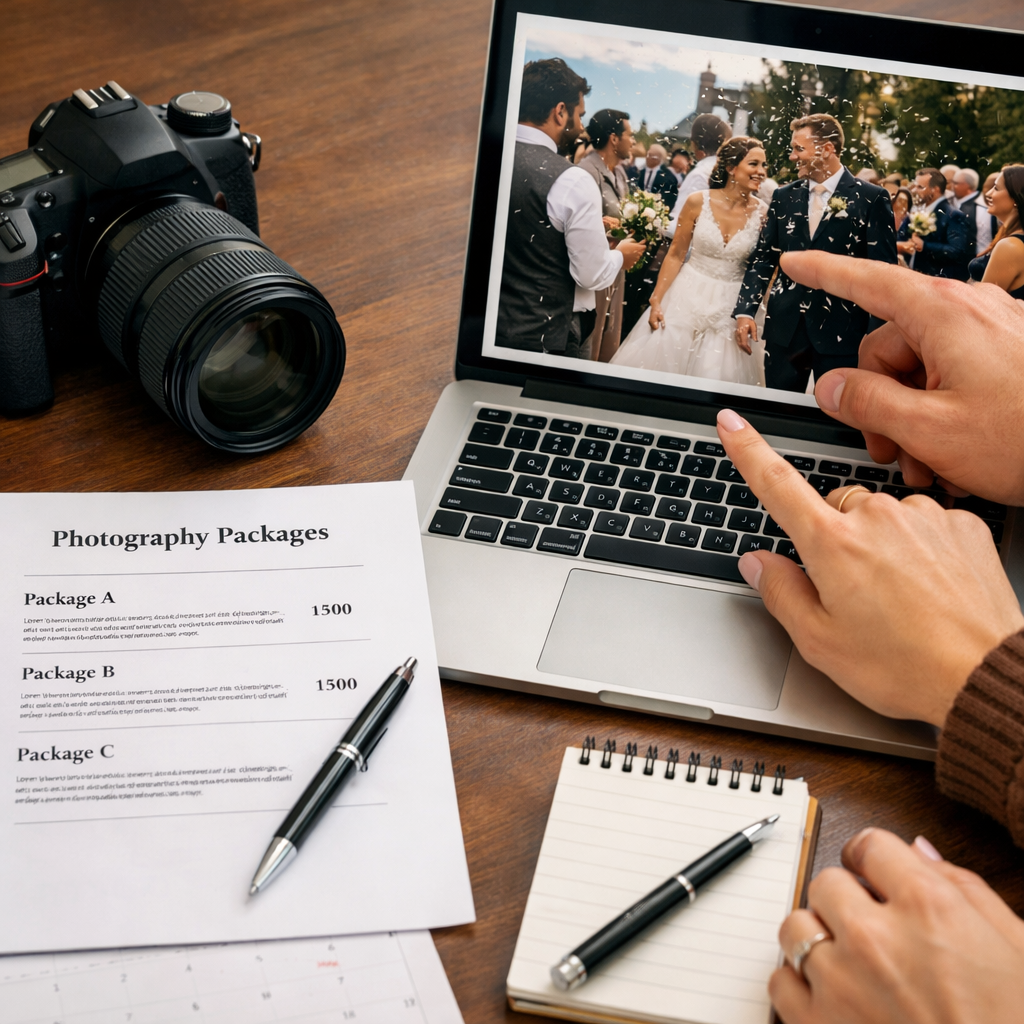
How to Find the Right Wedding Photographer for Your Budget
Finding a photographer who fits your budget and your vision doesn’t have to be overwhelming. Start by setting a clear spend range, decide what matters most, and review full wedding galleries so you know exactly what you’re getting. Average wedding photographer cost often lands between $2,500 and $6,500, with 8 hours and digital files typically starting around $2,500. With a step‑by‑step plan—plus smart trade‑offs like trimming hours instead of quality—you can book confidently and protect the moments you can’t recreate. This A Day in Mollywood guide walks you through how to research wedding photographers, compare packages apples‑to‑apples, and lock in a contract and timeline that keep the day calm and family‑friendly. For more planning support, browse A Day in Mollywood’s marriage tips.
Set your budget and must haves
Set a realistic ceiling first, then match it to your needs. Many couples spend between $2,500 and $6,500 on photography, depending on location, coverage, and experience, per Guestlense’s budget guide. An 8‑hour package with digital files and a print release commonly starts around $2,500, according to Jennifer Weinman Photography.
A print release is the photographer’s written permission to print your images for personal use while the photographer retains copyright. It outlines where and how you can make prints and usually limits commercial or third‑party use.
Make a concise must‑have list so comparisons stay consistent:
- Coverage hours
- Second shooter
- Ceremony and portraits priority
- Engagement session
- Album
- Print rights
- Turnaround time
- Backup plan
Budget flow:
- Set max spend
- Rank must‑haves
- Decide trade‑offs (cut hours or extras first—never core quality). The Every Last Detail’s cautionary story shows why “cheap” can be costly later.
Define your style and vision
Clarify the look you love before you search:
- Photojournalistic: candid, story‑driven moments.
- Editorial: stylized poses, fashion‑forward compositions.
- Film vs digital: film brings nostalgic grain and distinct tones; digital skews crisp and clean. Ask about these preferences early, as Carats & Cake’s photographer listings note.
Gather 8–12 inspiration images and label them by lighting (soft window light, golden hour), composition (close portraits, wide scene‑setters), and emotion (playful, intimate). Connect this to your logistics: kid‑friendly portraits, short attention spans, and tight timelines.
A first look is a private moment where the couple sees each other before the ceremony, allowing earlier portraits and easing the schedule while preserving emotions for the aisle.
Research local photographers by style and date
Start early—many photographers book up to two years in advance, per Jennifer Weinman Photography. Use directories with filters for location, style, and date. The Knot marketplace sometimes shows starting prices as low as $600; treat these as range signals, not quality guarantees.
Scan Instagram and recent blogs for consistency and professionalism. Look for timely replies, thoughtful captions, and steady posting, as Madison Event Center’s photographer guide emphasizes.
Review full wedding galleries for consistency
Request to see a full wedding gallery from a single event to judge skill across an entire day—getting ready through reception—not just a highlight reel. Both Madison Event Center’s guide and Jennifer Weinman Photography recommend this step.
What to check:
- Low‑light performance (ceremony, reception), mixed lighting, rain or harsh sun
- Consistency in lighting, composition, and editing across candid moments and portraits
- Storytelling: Do prep, ceremony, family formals, and dance floor feel connected?
A full wedding gallery is the complete set of edited images from one wedding day. It reveals technical range and how a photographer handles imperfect conditions better than social media highlights.
Vet experience, reviews, and professionalism
Ask about years shooting weddings, backup gear, liability insurance, and memberships like PPA or WPPI (a signal of professional standards), as outlined by Jennifer Weinman Photography. Read reviews with an eye for communication, reliability, and how they accommodate special requests, per Madison Event Center’s advice. Pro signals include a current website, clear pricing, recent social updates, and easy‑to‑understand galleries.
Compare packages and clarify inclusions
Use a simple side‑by‑side to spot true value and hidden costs. Discuss technology early (digital vs film, drone, a separate video team) as suggested by Carats & Cake’s listings, and confirm exact deliverables and turnaround.
Sample comparison table:
| Photographer | Hours | Second Shooter | Engagement | Album | Edited Images | Delivery Timeline | Print Release | Travel Fees | Taxes | Add‑ons | Total Price |
|---|---|---|---|---|---|---|---|---|---|---|---|
| A | 8 | Yes | No | Credit | 600+ | 8–10 weeks | Yes | Itemized | Incl. | Drone | $ |
| B | 6 | No | Yes | None | 400+ | 6–8 weeks | Yes | Itemized | + | Film rolls | $ |
| C | 10 | Yes | Yes | Album | 800+ | 10–12 weeks | Yes | Itemized | + | Rehearsal | $ |
Hours, second shooter, and timeline
As a benchmark, 8 hours with digital files and a print release often starts near $2,500 (Jennifer Weinman Photography). A second shooter shines with larger guest counts, multiple prep locations, tight timelines, or must‑capture moments like a first look and family formals.
Sketch a sample flow—getting ready → first look → ceremony → family formals → reception—and confirm what fits into 6, 8, or 10 hours so you aren’t surprised on the day.
Deliverables, file rights, and print options
Confirm whether you’ll receive edited images only (most photographers do not deliver RAW files), how long gallery access lasts, download resolution, and any album credits. Revisit print release terms and ask about recommended labs and color‑managed prints for accurate tones. Many studios deliver via platforms like Pixieset, noted in Safeena Noah’s roundup of photography software.
Travel fees, taxes, and add ons
Request an itemized estimate: mileage, lodging, per diem, sales tax, overtime rates, rush edits, rehearsal dinner coverage, drone or film add‑ons. Ask whether your venue requires permits or a certificate of insurance (COI).
Copy/paste fee checklist:
- Mileage
- Lodging/per diem
- Sales tax
- Overtime (rate + when it triggers)
- Rush edits
- Rehearsal coverage
- Drone/film rolls
- Permit/COI fees
Meet finalists to assess fit and communication
Schedule a meet‑and‑greet or video call to confirm chemistry—trust your instincts; connection matters, as Madison Event Center notes. Photographers who help clients feel comfortable consistently produce more natural portraits, a point echoed in Carats & Cake’s listings.
Quick questions:
- How do you direct shy people and kids?
- What’s your backup plan if gear fails or it rains?
- How do you build and buffer timelines?
- What’s your communication cadence pre‑wedding?
- Who’s your second shooter and how do you work together?
- How do you handle and organize family formals?
Make smart budget trade offs without sacrificing essentials
If the budget is tight, protect image quality and trim hours or extras first—don’t replace a seasoned pro, as The Every Last Detail underscores. Be cautious with “full‑day” offers under $1,000 (a common red flag cited by Jennifer Weinman Photography). Savings ideas from Guestlense’s budget guide: book shorter coverage, consider weekday or off‑season dates, add a rising pro or student as supplemental coverage, and set up guest photo stations or a hashtag as fun extras—not replacements for professional judgment.
Spot reliability signals and red flags
Positive signals: up‑to‑date social feeds, willingness to share full galleries, clear contract language, and professional client tools (e.g., Sprout Studio for invoices/contracts per Anna Delores’s business resources, Pixieset for delivery per Safeena Noah). Red flags: only staged highlights, inconsistent editing, evasive answers about backups or rights, outdated sites, and no reviews (Madison Event Center).
Pro software clues: Lightroom Classic CC for editing, Photo Mechanic for fast culling, and Backblaze for cloud backup—credible signs of a streamlined, secure workflow (Anna Delores; Safeena Noah).
A backup workflow is the system a photographer uses to duplicate and protect image files—typically using dual card slots in‑camera, on‑site external drives, and off‑site cloud services—to reduce risk if gear fails or files corrupt.
Lock it in with a clear contract and timeline
Your wedding photography contract should clearly state: date, coverage hours, second shooter, deliverables, print rights, payment schedule, cancellation/reschedule terms, overtime rates, travel fees, liability/insurance, and the backup plan. Get all promises in writing and confirm logistics early, as Jennifer Weinman Photography advises. Schedule a 30‑minute timeline review 6–8 weeks out to finalize shot lists, family formals, buffer times, and vendor contacts.
Plan day of logistics for stress free coverage
Build a calm, photo‑forward schedule with 10–15‑minute buffers between segments. Assign a family wrangler to help gather relatives quickly; a family wrangler is a trusted person who keeps portraits efficient and minimizes delays. Prioritize kid portraits early, and consider a first look to open portrait time. Tidy getting‑ready spaces, gather details (rings, invitations), and prep a rain/indoor plan. Share contacts for your coordinator, venue manager, and DJ/band for lighting cues, and confirm any no‑flash rules, as noted in Carats & Cake’s planning tips.
Frequently asked questions
How much does wedding photography typically cost?
Many couples spend $2,500–$6,500 depending on location, experience, hours, and deliverables. An 8‑hour package with digital files and a print release is often at least $2,500. For more context, see A Day in Mollywood’s marriage tips.
What questions should I ask before booking?
Ask about coverage hours, second shooter, delivery timeline, print rights, backups, travel fees, and exact deliverables. Request a full wedding gallery and clarify what’s in the contract. Find a concise checklist on A Day in Mollywood.
How many hours of coverage do most couples need?
Most couples book 6–8 hours for getting ready, ceremony, portraits, and key reception moments. Add time for multiple locations, big families, or elaborate receptions; A Day in Mollywood leans toward kid‑friendly buffers.
When should we book to get the best fit and price?
Start 12–24 months out for in‑demand dates; many photographers book up to two years ahead. Off‑season or weekday weddings can improve availability and value; A Day in Mollywood shares more planning timelines in our tips.
Is it worth hiring a friend or student to save money?
Friends or students can help with supplementary coverage, but for can’t‑miss moments a seasoned pro’s judgment and backup workflow are worth it. If saving, trim hours or extras—not quality; see A Day in Mollywood’s advice for smart trade‑offs.