
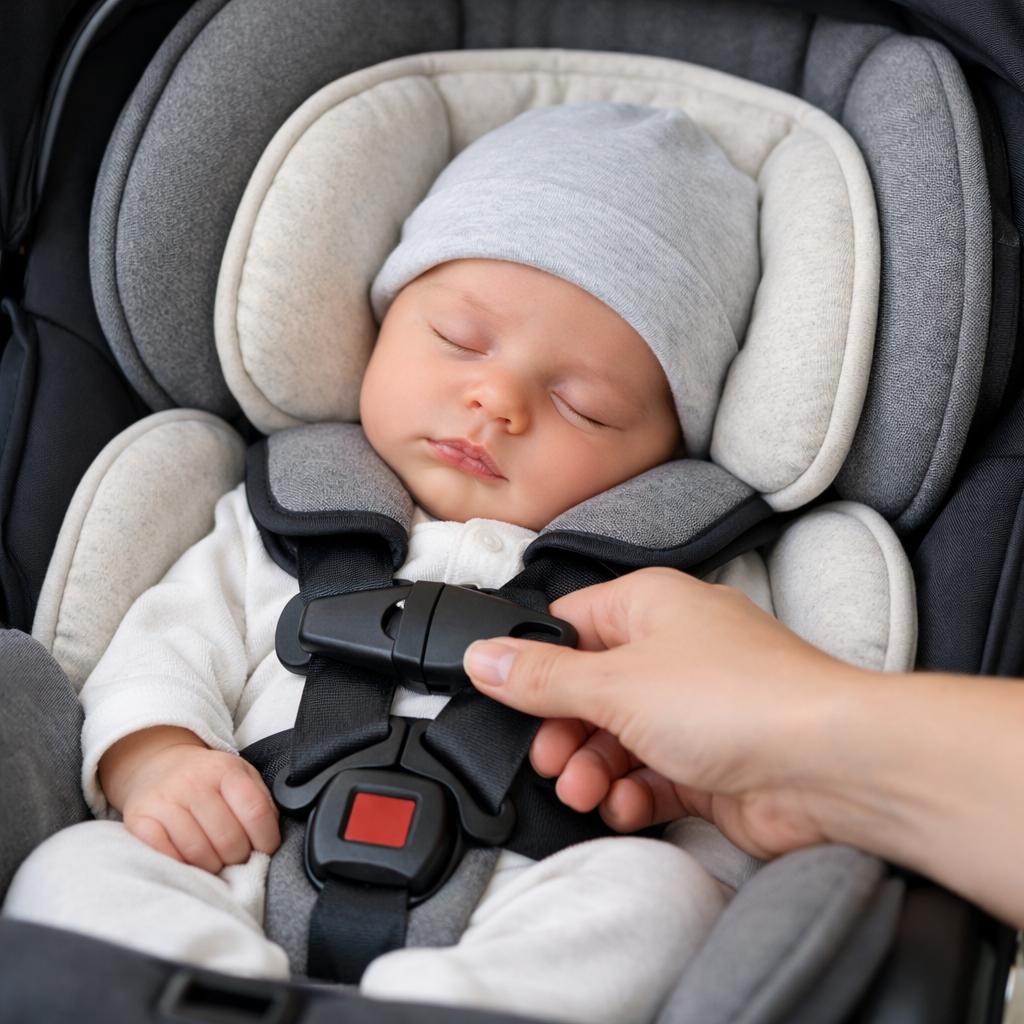
Newborn Head Slump in Car Seats? Supportive Options That Help
A gentle reality check for worried parents
If you’ve been white-knuckling the steering wheel while sneaking rearview glances at your baby’s chin drifting toward their chest, you’re not alone. Parents commonly report frequent stops and even riding in the backseat just to watch for head slump on early drives (often within the first weeks home) community reports. The good news: there are clear, expert-backed steps you can take today that improve newborn head support without risky hacks. Angle first, then harness. Use only what came in the box. If questions linger, a Child Passenger Safety Technician (CPST) can help you dial in your seat’s newborn fit. Throughout this A Day in Mollywood guide, we’ll walk you through safe newborn head support, infant car seat recline, and when to seek CPST help—so you can stop panic-checking the mirror and start trusting your setup.
What newborn head slump is and why it happens
Newborn head slump is when a baby’s head falls forward or to the side in a rear-facing seat, often during relaxed sleep, because neck muscles and head control are still developing. Most babies outgrow it as head control improves in the first months.
“Positional asphyxia” is breathing difficulty caused by body position compressing the airway. In newborns, a chin-to-chest posture can narrow the airway and reduce airflow. Because infant airways are tiny—“only the size of a drinking straw”—maintaining an open angle is crucial (expert overview).
A gentle sideways tilt is usually fine. What needs attention is persistent chin-to-chest in infants who don’t yet sit unassisted, especially if it repeats even after you’ve corrected recline and harness fit.
When chin-to-chest becomes a safety concern
Act quickly if you notice any of the following:
- No visible space between chin and chest.
- Noisy, labored, or paused breathing; color changes.
- Repeated forward flop even in a correctly installed, newborn-appropriate recline.
These are signs the airway may be compromised by position in babies without independent sitting. Proper rear-facing recline protects the airway while allowing some natural side movement (guidance; practical steps). If you need to nudge the head back to neutral, pull over before you adjust.
The first fixes to try in your current seat
Start with the basics before buying anything new.
- Set recline within the newborn range using the seat’s indicator.
- Use only the manufacturer-supplied newborn insert as directed.
- Adjust harness height and tension precisely.
- Re-check after a short drive.
Here’s a quick-reference table to guide your check:
| What to check | How to do it | Allowed tools | When to stop and get help |
|---|---|---|---|
| Rear-facing recline angle | Match the newborn line/zone on the angle indicator; prioritize the more reclined newborn setting when two lines exist | Only methods listed in your manual; if allowed, a tightly secured rolled towel or single pool noodle at the base | If the seat can’t achieve newborn recline in your vehicle or baby still slumps forward (step-by-step help) |
| Newborn insert use | Install the head/body insert exactly as the manual shows; remove it when your manual says to | Only the insert that came with your specific model | If the insert seems to push the head forward or isn’t permitted for your baby’s size |
| Harness height and tension | For rear-facing newborns: straps at or just below shoulders; tighten until you can’t pinch slack; chest clip at armpit level | Thin clothing; blanket over the harness for warmth | If lowest slots are still above shoulders or no-rethread headrest crowds the head |
| Observation drive | Do a 5–10 minute loop to watch head position | A mirror secured per your vehicle and seat guidance | If chin-to-chest persists; contact the manufacturer or a CPST |
Set the newborn recline correctly
Follow your car seat manual and use the built-in angle indicator every time. For infants without head control, aim for the seat’s more reclined newborn line when two lines are provided (why angle matters). If your manual allows, a tightly secured rolled towel or pool noodle at the base can fine-tune recline, but only if it’s explicitly permitted and installed firmly (practical tips). Don’t over-recline beyond the guidelines—too much tilt can reduce crash protection or cause sliding during a stop (context).
Use only the manufacturer’s insert
Many infant seats include a head/body insert designed and crash-tested with that exact model. If it came in the box and your manual permits it for your baby’s size and stage, use it. Skip aftermarket add-ons; unapproved inserts haven’t been tested with your seat and can increase injury risk or even push the head forward in a crash (safety reminder). As your baby grows, remove the insert when the manual indicates to maintain a neutral head position and better harness fit.
Dial in the harness fit
Position the straps at or just below the shoulders for rear-facing newborns. Tighten until no slack remains at the collarbone (no-pinch test), and set the chest clip at armpit level (stepwise setup). Some no-rethread harness systems sit bulky at the neck for tiny babies and can encourage a forward head tuck; if fit stays poor after adjustments, consider a model with a rethread harness or lower bottom slots that better match newborn geometry. Dress in thin layers and add warmth over the harness (never under it) to preserve proper tension and posture (cold-weather fit tips).
What not to use for head support
Avoid aftermarket head pillows, neck rings, forehead straps, or extra padding around the head. These products are not crash-tested with your seat and can obstruct the airway or alter how the harness protects your child. Viral “hacks” and generic neck pillows may seem helpful in photos but can create real risk at driving speeds (why to skip them; safety context). Safe swaps: use only the seat-included inserts, set the allowed recline, and keep the harness snug.
Signs it’s time to switch seats
If slump persists despite correct recline, a permitted insert, and precise harnessing—or if your baby’s anatomy simply doesn’t match the seat’s geometry—consider a different model. Document the issue with photos and contact the manufacturer for guidance; if sustained extra recline beyond instructions seems necessary to maintain an open airway, you need model-specific advice or a different seat (when to escalate).
Fit issues you can’t solve with adjustments
- Persistent chin-to-chest even at the allowed newborn recline.
- Head pushed forward by headrest shape or a high/bulky no-rethread headrest.
- Lowest harness slots still above the shoulders; chest clip crowds the neck.
- Special cases: premature or low-tone infants may not achieve head control on a typical timeline—seek a Special Needs–trained CPST and your pediatrician for tailored solutions (expert pathway).
When shopping, look for seat geometry that supports newborn fit:
- Lower bottom harness slots that truly sit at/below newborn shoulders.
- A supportive (not protruding) newborn insert that cradles without pushing forward.
- A wider crotch-buckle adjustment to prevent slouching.
Features that help tiny babies ride better
Prioritize:
- Multiple recline settings with a clear newborn angle indicator.
- Seat-included newborn inserts shaped to cradle the head in neutral.
- Rethread harnesses or very low harness heights that align at/below newborn shoulders.
Before you buy, verify the manual’s insert use and removal windows so fit stays great as your baby grows. For more options, see our roundup of reclining models in Best Reclining Car Seats for Babies and Toddlers in 2026 (features and fit notes) at our in-depth guide.
Supportive seat options that helped our family
We ended up choosing an infant seat with a rock-solid newborn angle indicator, a cradle-style insert that didn’t crowd the neck, and a rethread harness with truly low bottom slots. Those three features kept our baby’s head in a neutral, comfy position during naps and made installs feel repeatable—not a guessing game.
Mini takeaways from real life:
- Nap comfort: neutral neck, fewer mid-ride startles.
- Install ease: quick angle checks before every drive.
- Fit in a small car: compact base plus accurate angle indicator.
Most importantly, improved head support eased the mental load. We stopped hovering in the backseat and making constant roadside stops—something countless new parents say they struggle with too (shared experiences).
Special situations and when to get expert help
For premature infants, babies with low muscle tone, or complex medical needs, consult your pediatrician, your car seat manufacturer, and a Special Needs–trained CPST for individualized solutions (foundational guidance). Never hold a child’s head upright while driving—your body would be in the crash space. Pull over to adjust safely. Keep warmth over the harness, not under it, so fit and posture remain correct (cold-weather safety).
Real-life rhythm: driving with a newborn without panicking
Create a simple routine: check the angle indicator, do a quick harness pinch test, place the chest clip at armpit level, and take a 5–10 minute trial loop after any adjustment to observe head position. If allowed by your vehicle and seat, a properly secured mirror can help you glance at posture; on longer trips, ask a partner to ride in back for peace of mind—no improvised head props. Normalize pulling over to readjust; it’s safer and usually faster than in-seat fixes. For broader safety habits, browse our car seat safety and newborn head support resources.
Quick checklist before every ride
- Angle: newborn line/indicator within range.
- Insert: only what came with the seat and is permitted today.
- Harness: at/below shoulders, no pinched slack, chest clip at armpits.
- Clothing: thin layers; warmth over the harness only.
- Observation: visible space between chin and chest; airway looks open.
- Plan: if slump happens, pull over—don’t adjust while driving.
Frequently asked questions
Is newborn head slump dangerous or just uncomfortable?
Sideways head tilt is usually fine, but persistent chin-to-chest can narrow a newborn’s tiny airway and needs attention. Use this guide’s checklist to set newborn recline and harness fit before considering a different seat.
Can I use rolled blankets or a head pillow to keep the head up?
Skip aftermarket head pillows and neck supports. Use only inserts that came with your specific seat and place any allowed rolled blankets alongside the body (never behind the head), following your manual and this guide’s notes.
How do I know the recline angle is right for my baby?
Check the seat’s angle indicator and use the newborn line if provided; for very young infants, a more reclined position within the allowed range helps keep the airway open without over-tilting. This guide shows where to look and what to adjust so it’s quick to verify.
What should I do if my baby’s head falls forward while I’m driving?
Pull over safely before readjusting; recheck recline, harness height, and tightness using our checklist. If slump persists in a correctly set seat, contact the manufacturer or a CPST for model-specific guidance.
Who can check my car seat setup for head support and safety?
A CPST can assess recline, harness fit, and insert use for your exact seat and baby; our articles explain what to expect. Your car seat manufacturer’s customer service can also confirm what accessories and angles are allowed.