
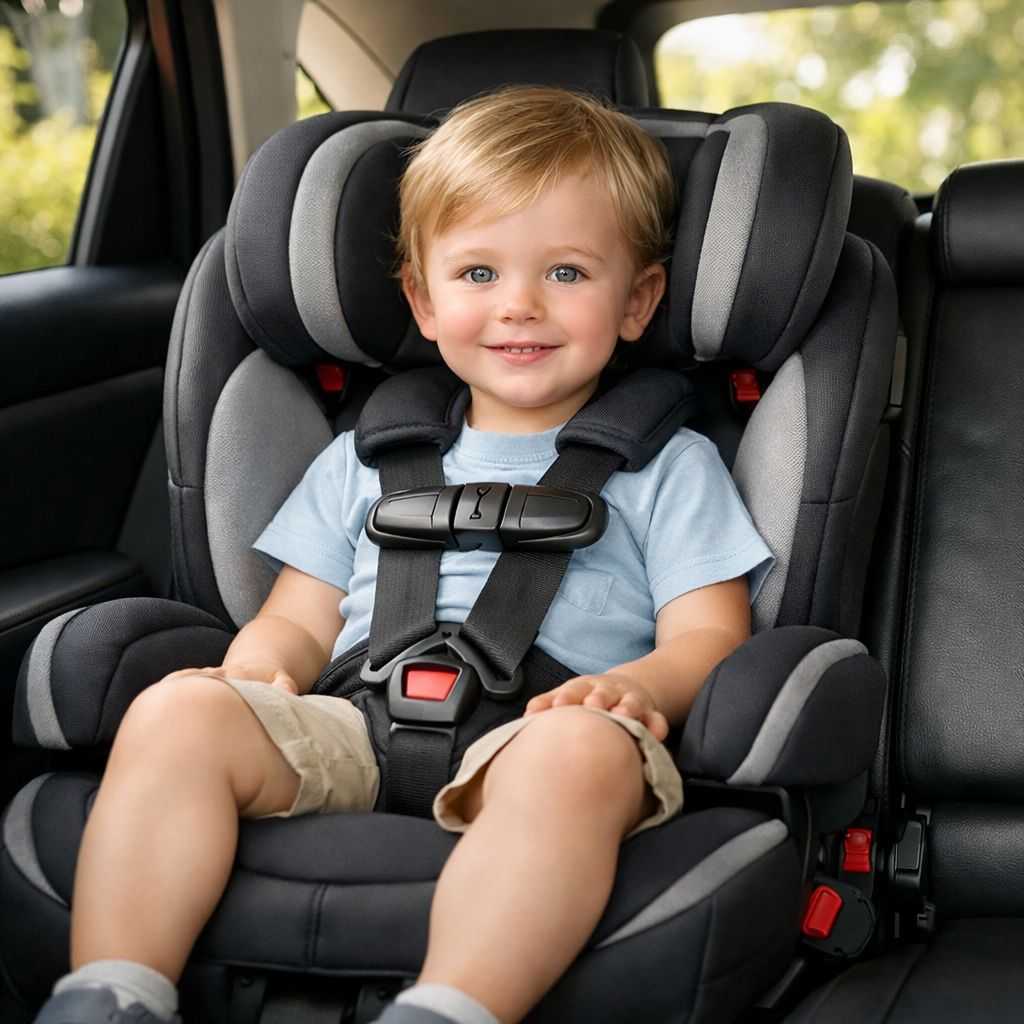
Safest Forward-Facing Car Seats for Toddlers: Comfort Meets Convenience
A Day in Mollywood
On the days I’m juggling preschool drop-off, a coffee that’s already cold, and a toddler who’d rather sprint than buckle, an easy-install, comfy seat is everything. The right forward-facing car seat clicks in tight, keeps little heads supported on long drives, and cuts my stress in half. This A Day in Mollywood guide blends lab-informed safety with mom-tested practicality to help you choose the safest car seats for toddlers—whether you’re eyeing convertible car seats or a harnessed booster—without the overwhelm. We’ll keep toddler car seat safety clear and doable, so you can pick once and ride confidently, every time. At A Day in Mollywood, we translate specs and standards into simple, real-life steps you can trust.
What makes a forward-facing seat truly safe
A forward-facing car seat is a child restraint used after rear-facing limits are met. It positions children upright and uses a five-point harness plus a top tether to limit movement in a crash. Models vary in height and weight limits, side-impact protection, and installation systems to help ensure proper use.
Two truths anchor this stage: “The safest seat is the one that fits your child, fits your vehicle, and is used correctly 100% of the time” from the experts at CSFTL’s recommended seats. And “all car seats must meet the same basic safety standards; pricier models often add convenience, not extra required safety,” as reiterated in Car and Driver’s convertible seat testing. Also remember the protection trade-off: rear-facing offers unmatched head, neck, and spine support, so only move forward-facing after your child exceeds rear-facing limits, as explained by Safe in the Seat’s rear- vs. forward-facing guide.
When to switch from rear-facing to forward-facing
Use your seat’s stated limits—not age alone. Many kids can remain rear-facing until roughly age 4, depending on seat height and weight caps, according to Safe in the Seat’s guidance. AAA has warned that children under 2 riding forward-facing face a higher risk of head, neck, and spinal injuries, so wait as long as your seat allows, per AAA’s research on early transitions.
Ready to switch? Check:
- Has your child met the rear-facing height or weight limit on the seat label/manual?
- Is the head above the rear-facing shell limit noted by your seat maker’s rules?
- Can you install forward-facing with a top tether in your chosen seating position? See the NHTSA car seat guide.
How to choose the right seat for your child and car
Use this quick flow to match seat to child, vehicle, and lifestyle:
- Size match: Compare your child’s height and weight to seat limits; many forward-facing harnesses go to about 65 lb and 49 inches, a range echoed by Wirecutter’s car seat research.
- Car fit: If you need three across, look for narrower seats around 17–19.5 inches wide.
- Install confidence: Choose installation systems you’ll actually use—rigid LATCH, built-in lockoffs, or seat-belt tensioners (e.g., ClickTight/SuperCinch)—to reduce errors, as summarized in this 2025 standards overview.
Top tether, defined: The top tether is a webbing strap on forward-facing seats that hooks to a vehicle tether anchor behind the seat. Properly attached and tightened, it limits forward head movement in a crash and reduces injury risk. Always connect the tether for forward-facing use (see NHTSA’s guidance).
Finally, register your seat for recall notices and note expiration (often up to about 10 years) as urged by the advocates at CSFTL.
Key safety features to prioritize
- Five-point harness plus top tether: Limits movement better than a booster for toddlers and young kids; keep harnessing until the seat’s limits, per Consumer Reports’ upgrade guidance.
- Side-impact protection and energy-absorbing foams: Added layers that manage lateral crash forces, highlighted in the 2025 standards explainer.
- Strong installation aids: Rigid LATCH, trustworthy lockoffs, and tensioning systems (like ClickTight or SuperCinch) minimize install errors, which boosts real-world safety.
- Anti-rebound features or load legs (where offered): Help control crash motion; more common in premium models and some convertibles.
Context: Higher prices typically buy convenience, materials, and user-friendly features—while all retail seats meet baseline federal standards, as echoed by Car and Driver’s testing. At A Day in Mollywood, we prioritize features that make correct use repeatable on hectic mornings.
Comfort details that make daily use easier
Comfort supports safety because a content kid and a calm caregiver use the seat correctly every ride. Look for:
- Plush, breathable padding and easy-to-remove, machine-washable covers.
- Smooth recline and a no-rethread harness with adjustable headrest to handle naps and growth spurts.
- Helpful touches: buckle pockets, cupholders, calf support; extended legroom designs in earlier rear-facing mode can delay the switch and help road-tripping families, as noted in BabyGearLab’s car seat reviews.
- Low-emission, flame-retardant-free fabrics and certifications like GREENGUARD Gold are increasingly available in premium lines, as the 2025 standards overview notes.
Installation made simpler for real-life parents
- Read both the car seat and vehicle manuals to confirm methods and limits (see the NHTSA car seat guide).
- Choose either seat belt or LATCH for forward-facing; tighten until the seat moves less than 1 inch at the belt path.
- Attach and firmly tighten the top tether for every forward-facing ride.
- Snug the harness (no slack) with the chest clip at armpit level.
LATCH, defined: LATCH (Lower Anchors and Tethers for Children) uses built-in vehicle anchors and seat connectors instead of the seat belt. It can simplify installs but has combined weight limits. Check both manuals to decide whether LATCH or the seat belt gives the tightest, allowed install for forward-facing (see NHTSA).
If you’re unsure, book a CPST (Child Passenger Safety Technician) check—community events can spot small mistakes quickly. For a plain-language refresher on methods, see our guide to quick-install car seats: LATCH versus seat belt.
Top-rated forward-facing seats by use case
Every pick below meets federal standards. At A Day in Mollywood, we prioritize easy, repeatable installation; strong harness limits; and comfort that helps families use seats correctly every ride. Always confirm the fit in your vehicle and your child’s current size. For context, many forward-facing harnesses top out around 65 lb and 49 inches, and narrow seats (≈17–19.5 inches) can help with three across, per Wirecutter’s testing notes. Rotating bases can ease loading in roomier vehicles but may be obstructed in tight sedans, and the Evenflo Revolve360 is about 31.5 lb with RF 4–50 lb and FF 30–65 lb ranges, according to Car and Driver’s test data.
| Model | Forward-Facing Limits | Standout Safety/Install Feature | Comfort/Width Notes | Who It’s For |
|---|---|---|---|---|
| Britax One4Life ClickTight (convertible to booster) | Harness to 65 lb, 49 in | ClickTight seat-belt tensioner reduces install errors | Plush padding; about 19–19.5 in wide | Caregivers who want the most intuitive installs |
| Chicco MyFit (harnessed booster) | Harness to 65 lb, 49 in | LockSure belt system; SuperCinch LATCH | Supportive headrest; ~17.5–18 in wide | Daily carpoolers who move seats occasionally |
| Graco SlimFit3 LX (convertible) | Harness to 65 lb, 49 in | Clear belt paths; easy belt routing for three across | Narrow (~16.7–17 in) footprint | Small cars and three-across families |
| Graco Tranzitions (harnessed booster) | Harness to 65 lb, 49 in | Lightweight; straightforward belt path | Narrow (~17 in); budget-friendly | Backup cars and budget-focused caregivers |
| Clek Foonf (convertible) | Harness to 65 lb, 49 in | Rigid LATCH (FF) + energy management | Slim (~17 in); firm, supportive ride | Safety tech fans and tight backseats |
| Evenflo Revolve360 (convertible, rotating) | FF 30–65 lb; RF 4–50 lb | 360° rotation eases loading | Bulky base; ~31.5 lb seat weight | SUVs/minivans where rotation clears doors |
| Nuna Rava (convertible) | Harness to 65 lb, 49 in | Strong seat-belt tensioning panels | FR-free, breathable fabrics; ~19 in | Comfort-first caregivers wanting simple installs |
Best for easy installation
If you crave foolproof installs, look for strong seat-belt tensioners or rigid LATCH and clear lockoffs (think ClickTight- or SuperCinch-style systems). These designs reduce common errors and build day-to-day confidence. Ensure the top tether anchor is easy to access, and remember to attach it every time. Great for babysitters, grandparents, and any family swapping cars on busy weeks.
Best for compact cars and three across
Narrow seats around 17–19.5 inches and compact bases simplify life in small backseats. When testing three across, confirm each buckle is independently accessible and try seat-belt installs (which often free more lateral room than lower anchors). Skip bulky rotating bases in tight sedans where doors and pillars can block rotation.
Best for long rides and nap-friendly comfort
For road trips or long daycare commutes, a multi-position recline and a truly supportive, adjustable headrest help prevent head slump. Breathable, cushy padding and quieter harness adjustments reduce fussing. If you’re still rear-facing an older toddler, extended legroom designs can delay the forward-facing switch and keep everyone happier on the highway. For more snooze-friendly setups, see our picks for best reclining car seats.
Best budget-friendly pick without sacrificing safety
Remember: all seats on store shelves meet federal safety standards. If you’re watching costs, prioritize a solid harness to 65 lb, a clear belt path with lockoffs (or easy LATCH), dependable side-impact structure, a top tether you’ll use every time, and washable covers. Budget models make excellent second seats for carpools or grandparents’ cars.
Best premium features and finishes
Premium seats add intuitive belt-tensioning systems, magnetic buckles, rigid LATCH (in some models), and energy-management designs. Many offer FR-free, low-emission fabrics and even GREENGUARD Gold certifications. These comfort and usability upgrades can support consistent, correct use—peace of mind on those high mental load days.
Travel and everyday life with toddlers in car seats
If you’re lifting seats often, a lighter harnessed booster or convertible simplifies airport runs and rideshares. Rotating designs can be a blessing in SUVs and minivans but may be awkward in tighter sedans. Keep a small “car kit” with a spare cover, wet bag, wipes, and a tiny toy bin to defuse meltdowns. For smoother trips, pair your seat with compact strollers and breathable travel cribs—our family travel guides at A Day in Mollywood keep it real for busy parents.
Mental load check-in and doing the best you can
I’ve second-guessed every gear choice under the sun. What finally eased my mind was learning a solid install and sticking with a seat my child actually liked. Child restraints reduce fatalities by an estimated 71% for infants and 54% for ages 1–4—your effort matters, as highlighted in AAA’s analysis. Micro-mantra to take with you: fit the child, fit the car, used correctly 100% of the time.
Frequently asked questions
What age and size should a child be to face forward safely
Switch only after your child maxes out the rear-facing height or weight limits—often around age 4 for many seats per the manual. At A Day in Mollywood, we echo the guidance that under 2, forward-facing raises head, neck, and spine risk, so wait as long as your seat allows.
Is a five-point harness safer than a booster for my toddler
Yes—the five-point harness with a properly attached top tether limits movement better than a booster for younger kids. At A Day in Mollywood, we recommend harnessing until your seat’s limits and your child shows booster-ready maturity.
LATCH or seat belt install which should I use for forward-facing
Either is safe when done correctly; use the method that gives the tightest, allowed install in your vehicle. We walk through the tradeoffs in our plain-language guides, and always attach the top tether.
Do I need to use the top tether every time
Yes—the tether significantly reduces forward head movement in a crash and is essential for forward-facing safety. A Day in Mollywood treats it as non-negotiable: connect and tighten it at every install and every ride.
How long can my child stay in a forward-facing harness before moving to a booster
Most harnessed seats allow about 65 lb and 49 inches; many kids stay harnessed roughly until ages 4–7. We suggest moving to a booster only after outgrowing harness limits and proving they can sit correctly the whole ride.