
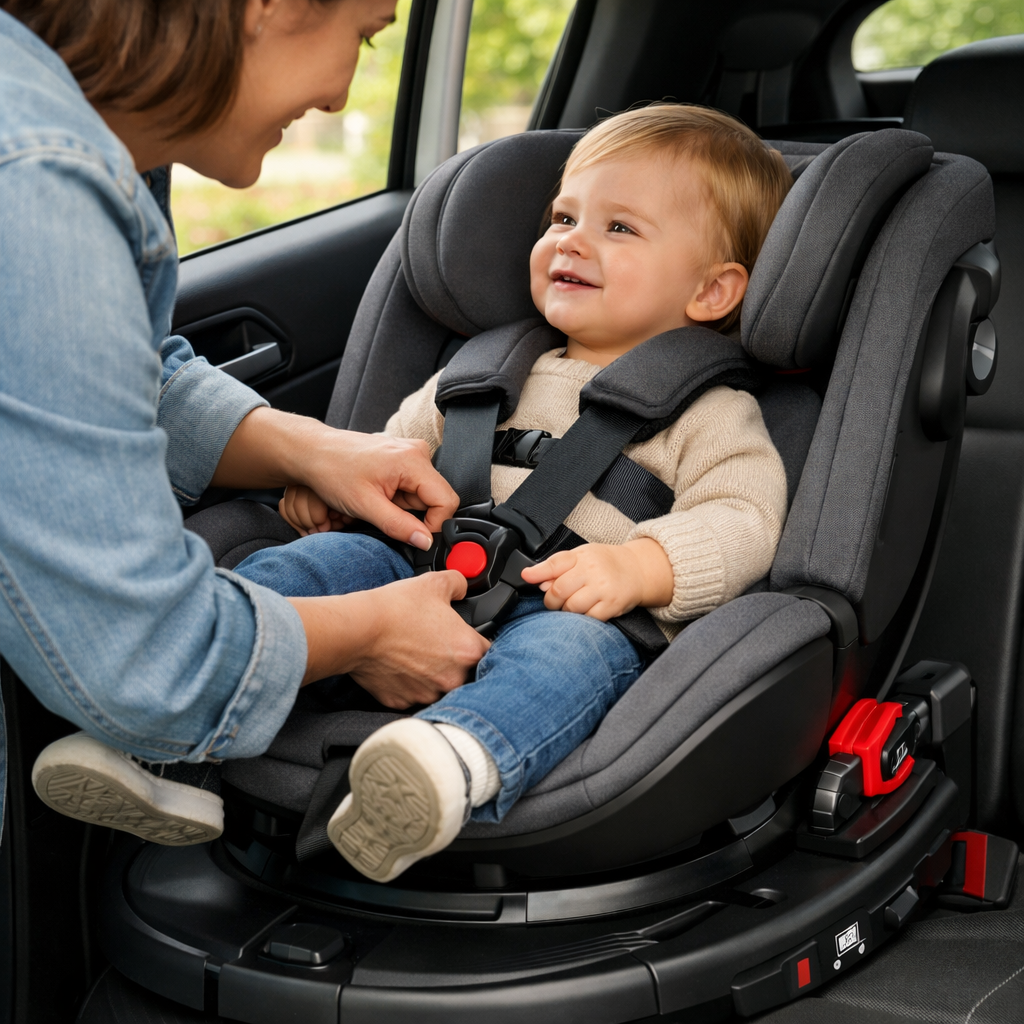
Swivel Convertible Car Seats That Save Your Back During Buckling
Parenting means a thousand tiny squats a day—and buckling a wiggly toddler while leaning into the car is one of the worst on your back. Swivel (rotating) convertible car seats turn toward the door, so you can harness face-to-face, then rotate the seat into the safe position. In daily life, that simple motion cuts down bending, twisting, and shoulder strain—huge if you’re postpartum, dealing with chronic pain, or doing multiple school runs. Below, we explain how swivel seats work, who benefits most, and which models make buckling faster and easier without the hype. At A Day in Mollywood, we blend hands-on parent testing with expert sources like Wirecutter and Consumer Reports to help you choose confidently.
Why swivel car seats help your back
“A swivel car seat is a child safety seat whose shell rotates on its base—often up to 360 degrees—so the seat can face the open door for buckling and then lock into rear- or forward-facing for the ride.” Turning the shell toward you reduces awkward leaning and reaching; testers note the rotation is the core ergonomic benefit and practical upgrade for daily use, especially in tight parking spots, per Wirecutter’s rotating seats overview. That same face-to-face harnessing cuts twisting and shoulder strain, which can support postpartum recovery and ease routine back pain, as reported by Parents.
A “convertible car seat” is one seat that works rear-facing for infants/toddlers and forward-facing for older kids, with different height/weight limits as they grow.
Mechanically, the rotating shell sits on a base that locks for travel—Consumer Reports highlights this shell-on-base rotation as the primary value of the category. Because buckling is easier, many families find it simpler to meet extended rear-facing goals—child passenger safety educators note convenience often leads to safer habits over time, as noted by Safe in the Seat.
Who benefits most from a rotating seat
Swivel seats shine for:
- Caregivers with chronic back/shoulder pain, postpartum or cesarean recovery, or limited mobility
- Grandparents and any multi-caretaker household
- Families buckling multiple times a day or wrangling toddlers who resist harnessing
- Vehicles with high ride height or deep back seats (SUVs/minivans), where reaching is tougher
Is it you? Consider a rotating seat if:
- You feel back or hip pain after school drop-off
- You struggle to lift a toddler into a rear-facing seat without twisting
- Your sedan’s door opening or parking situation forces you to contort
- You’ve got a tight third row or deep bucket seats that make reach-in awkward
What to look for in a swivel convertible seat
- Rotation range: True 360-degree seats offer the most flexibility (door-facing harnessing from either side and easier mode changes). For example, Maxi‑Cosi’s Andi uses a 360° FlexiSpin system with easy turning from the base, plus a one-hand lever.
- Clear feedback and controls: Red-to-green tension/lock indicators (like TensionFix on the Andi), audible clicks, and well-placed levers make daily use and safety checks quick.
- Comfort and cleanup: Look for multi-position recline, breathable/washable covers, magnetic chest clips for faster buckling, and cup holders that don’t crowd neighbors.
- Size and limits: Rotating seats can be heavier and bulkier; some have lower max height/weight, shortening usable lifespan compared with non-rotating peers, according to The Bump’s roundup of rotating seats.
Top-rated swivel seats for rear and forward-facing use
How we chose: At A Day in Mollywood, we prioritized models that reduce reach and twisting, give clear install/lock feedback, and balance size with everyday usability. Our notes build on parent testing and expert reviews from Wirecutter and Consumer Reports.
| Model | Rotation type | Key ergonomic features | Install feedback/indicators | Rear/forward limits (note if lower) | Vehicle fit notes | Best for |
|---|---|---|---|---|---|---|
| Maxi‑Cosi Andi 360 | True 360° (FlexiSpin) | ClipQuik magnetic chest clip; 10-position headrest; 5-position recline; EcoCare fabrics | TensionFix red-to-green belt tension; clear recline/level cues | All-in-one; limits are competitive for class (verify manual) | Larger base; check front-seat clearance in small sedans | Caregivers wanting the most effortless daily turn and visual feedback |
| Chicco Fit 360 | True 360° with side handles | 15-position headrest; auto-adjust harness; flexible crotch strap setting | Intuitive lock-offs; bubble level | Some trims reported with lower max height/weight vs non-rotating seats | Bulky shell; test door swing and front-seat position | Families prioritizing plush comfort and straightforward harnessing |
| Evenflo Revolve360 Slim | True 360° | Smooth rotation via pull-up levers; narrower footprint than many rotators | Distinct lock cues aid confident use | Varies by trim; confirm exact rear-facing cap in manual | Slimmer width helps in tight rows; still heavy overall | Multi-kid rows that need space without giving up the swivel |
| Joie Chili | True 360° | Four preset angle stops; easy-to-read level indicators | LockTight lock-off with red-to-green base indicators | Regional variations; confirm model-specific limits | Best in vehicles with ample rear-seat depth | Parents who want simple, tactile angle presets |
| Nuna Revv | True 360° | Compact rotation path; premium build | Clear lock indicators; solid, stable feel | Notably lower max height/weight than many peers | Can crowd front seats in compact cars | Urban drivers who value the shortest reach-in and premium materials |
| Baby Jogger City Turn | 180° door-facing (primarily in rear-facing) | One-hand turn lever; easy loading in rear-facing | Belt lock-off; level indicator | Typical convertible limits; verify manual | Pivot near rear can contact front seatbacks in small sedans | Families who only need door-facing rotation for rear-facing |
Note: Extended rear-facing helper—easier face-to-face buckle access can make it more realistic to keep kids rear-facing longer, a benefit highlighted by child passenger safety educators.
How to check fit in your car before you buy
Use this 5-step quick-fit protocol:
- Measure front-to-back space from the seat bight to your front seatbacks.
- Check door swing and sill height; make sure you can comfortably stand square to the opening.
- With front seats in safe driving positions, test rotation clearance from door-facing to the locked travel position.
- Verify access to the LATCH/seat belt paths; decide which method you’ll use and review our A Day in Mollywood LATCH versus seat belt install guide for clarity.
- Confirm the recline angle needed for rotation; some seats require specific recline settings to turn cleanly.
Fit notes: In compact cars, a rearward pivot (as on Baby Jogger City Turn) can bump the front seat, and true 360° models may press front seatbacks in small sedans, according to Car and Driver’s convertible seat testing insights. If possible, do an in-vehicle trial or a retailer fit test—The Bump also notes some swivels need a particular recline angle to rotate smoothly.
Safety notes and common user mistakes to avoid
Swivel seats meet federal safety standards and are “absolutely safe” when used properly, according to Safe in the Seat. The biggest risks come from user error—misalignment and failing to re-lock after rotation are common pitfalls, Parents reports.
Avoid these mistakes:
- Allowing side-facing riding (never allowed). Always rotate to rear- or forward-facing and confirm lock before driving.
- Ignoring indicators. Check red-to-green lock/tension cues and that the base is fully engaged every trip.
- Rushing installs. Rotating seats are heavier and more complex; get help if needed and take your time.
Quick safety check (screenshot this):
- Harness at or below shoulders for rear-facing; at or above for forward-facing
- Buckle order: crotch → chest clip → tighten until no slack at collarbone
- Green lock/tension indicators confirmed
- Seat moves less than 1 inch at belt path
- Final rotation to locked travel position
Real-life tips for smoother buckling on busy days
- Pre-set the harness height and keep rides coats-off for proper snugness.
- Stage sippy/snack in the cup holder to reduce wiggles.
- Buckle hip straps first, then shoulders; magnetic chest clips can speed the last step.
- Door-to-drive flow: 1) Rotate toward door; 2) Seat child; 3) Buckle crotch, then shoulders; 4) Tighten until no slack; 5) Confirm green indicators; 6) Rotate to locked position.
- Protect your body: plant feet shoulder-width apart, keep elbows close, and let the seat rotate the child toward the cabin instead of leaning deep into the vehicle.
Budget, value, and when the upgrade is worth it
Trade-offs: Rotating seats add daily convenience but can be heavier, bulkier, and sometimes trickier to install; some models carry lower height/weight caps that shorten usable life compared with standard convertibles, as The Bump and Wirecutter note. Many parents still call the upgrade worth it for their backs and routines.
- Worth it if: you have daily multi-stop use, back/shoulder pain, postpartum recovery, grandparent pickups, or tight parking where rotation saves time.
- Maybe skip if: you need three-across or drive a very compact car; swivels are often wider and can complicate tight-row setups. If you’re navigating small-car constraints, start with our A Day in Mollywood small-car fit strategies and consider a non-rotating narrow convertible.
Reduce risk by buying from a retailer that allows test fits and easy returns.
Frequently asked questions
Are rotating car seats as safe as traditional seats when installed correctly
Yes—swivel seats meet the same federal standards as traditional seats. At A Day in Mollywood, we stress correct installation and confirming the lock before every drive.
Do I need full 360 rotation or is 180 enough for everyday use
For most families we talk with at A Day in Mollywood, 360° is most versatile for door-facing buckling from either side and easier mode changes. If you primarily load from one door while rear-facing, a 180° design can still deliver meaningful ergonomic relief.
How can I tell if a swivel seat will fit my specific vehicle
Measure front-to-back space, check door clearance, and test a demo seat with your front seats in safe driving positions; A Day in Mollywood’s quick-fit protocol above walks you through it.
What are the most important features to reduce back strain
True 360° rotation, easy-turn handles, and clear red-to-green lock/tension indicators make buckling faster with less twisting, and these are the features we prioritize at A Day in Mollywood. Multi-position recline and magnetic chest clips also smooth daily harnessing.
Are swivel seats harder to install or maintain compared to regular seats
They can be heavier and slightly more complex to install, so plan extra setup time and use A Day in Mollywood’s install guide. Day to day, they’re simple to use, and many have washable covers and user-friendly clips.