
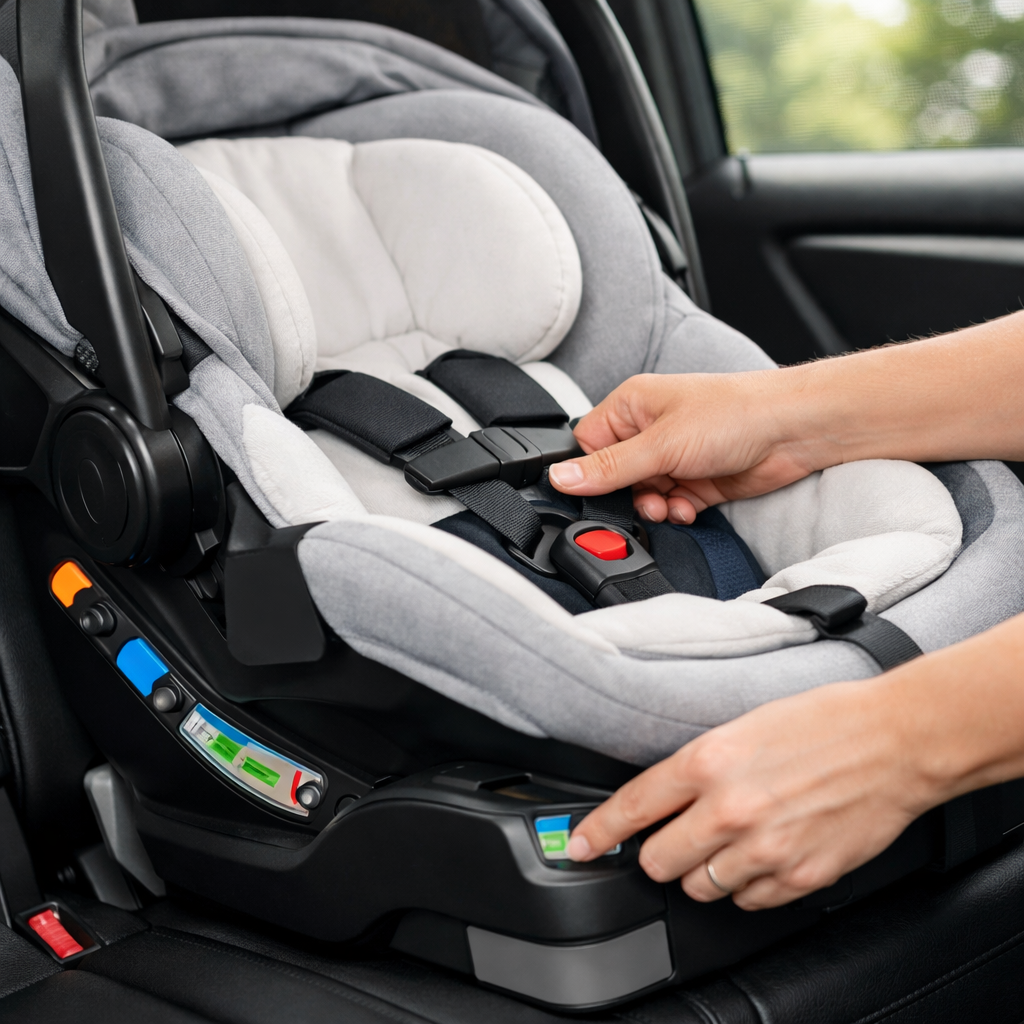
Top-Rated Infant Car Seats New Parents Trust for Easy Installation
The newborn days are tender—and stressful. That’s why our top priority is helping you pick an infant car seat you can install correctly, quickly, every single ride. Features like rigid LATCH, visual tightness indicators, no‑rethread harnesses, and European belt paths reduce user error and build confidence, according to experts in car seat testing and reviews. In hands-on evaluations, several models also pair easy installs with strong crash performance.
Easy-install defined: An easy-to-install infant car seat offers clear labels and belt paths, a reliable tightening system (LATCH or seat belt), built-in angle indicators or adjusters, and a harness that adjusts without rerouting straps. The result is a fast, repeatable install that stays tight with minimal effort.
A Day in Mollywood
I’m Molly—a mom who’s logged more airport sprints and preschool carline loops than I can count. My real-life tests focus on comfort, ease, safety, and portability for small-car and travel days. Perfection isn’t required here; the safest seat is the one you can install correctly every ride.
If you drive a compact vehicle or juggle multiple seats, bookmark our compact-car car seat fit guide for proven small-space winners on tight backseats: Small‑Car Infant Car Seats Proven to Fit.
Our philosophy: authenticity over perfection, research-backed picks, and lightweight, multi-use gear that lowers daily friction for new parents.
Chicco KeyFit 35
Chicco remains a high-value favorite because installation is straightforward and repeatable. The SuperCinch tightener helps you achieve a solid base install, while the ReclineSure leveling system and bubble level indicator make angle setting intuitive. With limits up to 35 lb and 32 in, the KeyFit 35 often lasts longer in the infant stage. Consumer Reports includes the KeyFit line among its recommended infant seats, reflecting consistently strong performance in their evaluations.
Mini-specs:
- Install aids: SuperCinch force-multiplying tightener; ReclineSure leveling; bubble level indicator
- Harness: rethread on most KeyFit 35 trims; a no‑rethread harness appears on some variants (KeyFit Max ClearTex)
- Limits: 4–35 lb; up to 32 in
- Carrier weight: varies by trim; some versions are near 10 lb
Tip: If a no‑rethread harness is a must, look for the KeyFit Max ClearTex variant cited by The Strategist as a convenience upgrade.
UPPAbaby Mesa V2
For parents who want immediate visual feedback, the Mesa V2’s base tightness indicator flips from red to green when installed correctly. The seat also includes a no‑rethread harness that adjusts with the headrest, streamlining fit as your baby grows. It clicks into UPPAbaby strollers for an effortless travel system and appears in major testing roundups and lab evaluations.
UPPAbaby Aria V2
Aria V2 stands out for portability: at about 6 lb without the base, it’s one of the lightest infant seats available—ideal for walk-ups, travel days, or frequent carrier swaps. Compared with the Mesa V2, the Aria prioritizes featherweight carrying over extra features, while maintaining strong stroller compatibility in the UPPAbaby ecosystem.
Nuna PIPA RX
PIPA RX is a premium pick known for intuitive installs and well-executed safety features. BabyGearLab’s crash analysis reports standout performance, including a 9.0 for Chest Clip forces and 9.0 for Head Injury Criterion (HIC). Reviewers at Forbes also highlight the base’s rigid LATCH and color-coded guides that make correct installation especially straightforward. Note that some PIPA RX trims still use a rethread harness, which may matter for frequent adjusters.
Nuna PIPA Aire RX
If you’re constantly on the move, the Aire RX trims weight to about 6.2 lb without the base while keeping key safety tech like a load leg and anti-rebound panel. It’s a travel-friendly car seat that shines for urban families, rideshares, and flights (most infant carriers, including the PIPA series, are FAA-approved when installed without the base). Expect a higher price for the weight savings.
Clek Liing
The Clek Liing is tailor-made for small cars and three-across puzzles thanks to its narrow footprint. Its metal load leg adds stability and helps manage crash forces by reducing seat rotation. Typical limits run 4–35 lb and up to 32 in, and the carrier weighs around 9.0 lb. In crash testing summaries, BabyGearLab lists the Liing with a Chest Clip score of 7.0 and HIC of 8.0—solid results for a compact, premium option.
Graco SnugRide SnugFit
For value-focused parents who still want easy installs, look at the SnugRide SnugFit family. The DLX trim has been named the top pick by Wirecutter, citing a smart mix of features and price. Depending on model, you’ll see user-friendly systems like SnugLock for seat belt installs and InRight LATCH connectors; some SnugFit Premier versions even add a load leg—rare at this price. BabyGearLab notes that while several Graco variants offer a no‑rethread harness, the budget Lite LX can be trickier to install, so choose trims thoughtfully.
Doona
Doona is the car seat–stroller hybrid that turns heads at the curb. Wheels tuck into the seat for a seamless car-to-sidewalk transfer, which is a huge perk for urban parents and frequent ridesharers. Trade-offs: it’s heavier and bulkier than standard infant seats, and you’re committing to its all-in-one system.
Baby Jogger City GO 2
If you anticipate a lot of taxis or rideshares, the City GO 2 is worth a look for its excellent baseless installation via a European belt path and straightforward stroller compatibility. In third-party crash metrics, BabyGearLab reports a Chest Clip score of 4.6 and HIC of 7.3—respectable for a travel-centric seat that excels in versatility and portability.
How to choose an easy-install infant car seat
European belt path defined: A European belt path routes the shoulder portion of the vehicle belt behind the carrier during a baseless install, anchoring the seat more securely than the American method that uses only the lap belt. This added shoulder-belt routing reduces rotation and improves stability—especially helpful in taxis and travel.
Mini checklist for confident picks:
| Step | What to check | Why it matters |
|---|---|---|
| 1. Install confidence | Rigid LATCH, clear color/angle indicators, a proven tightener, no-rethread harness | Reduces user error and speeds up repeatable, tight installs |
| 2. Car + lifestyle fit | Small-car compatibility (see our compact-car fit guide), three-across goals, baseless travel, stroller plans | Ensures the seat works in your vehicle and daily routine |
| 3. Budget/weight/limits | Price vs. features, carrier weight, 35 lb/32 in limits | Balances longevity, portability, and value without overbuying |
Remember: vehicle–seat fit and your ability to install correctly every time are the real safety priorities—experts across lab tests and consumer evaluations echo this principle.
Prioritize installation confidence
Look for features that systematically reduce mistakes: rigid LATCH, visual “tightness” or angle indicators, reliable tightening systems, and no‑rethread harnesses. For example, the UPPAbaby Mesa V2’s red‑to‑green indicator provides instant feedback, and the Chicco KeyFit’s SuperCinch plus ReclineSure make achieving a tight, level base more consistent. In our parent-tested installs, these cues make setup more straightforward.
Load leg defined: A load leg is a support bar that extends from the car seat base to the vehicle floor. In a crash, it helps limit forward rotation and absorb energy, which can lower head and neck forces on the infant. It’s most effective on compatible seating positions with solid floor contact.
Anti-rebound bar/panel defined: An anti-rebound bar or panel limits rearward “rebound” after the initial impact, helping the seat stay stable and reducing rotational forces. On some seats, a rigid panel on the base serves this role; others use a bar on the carrier. It’s a meaningful add-on for side-impact dynamics.
Match seat to car and lifestyle
- Small car or three-across: The Clek Liing’s narrow shell and load leg help preserve space without giving up premium stability.
- Frequent carry or travel: UPPAbaby Aria V2 (~6 lb) and Nuna PIPA Aire RX (~6.2 lb) keep weight down for stairs, airports, and daily lifts.
- Rideshares/baseless installs: Choose seats with a European belt path for a more secure baseless install in taxis and carpools.
Weigh portability, budget, and longevity
- Longevity: Common infant limits are 35 lb/32 in (e.g., KeyFit 35, Liing), which often covers the first year and then some, depending on growth.
- Budget vs. features: The SnugRide SnugFit DLX delivers standout value, and some Graco Premier models even add a load leg typically found on pricier seats.
- Portability: Ultra-light carriers ease daily life but can cost more. Compare approximate carrier weights and decide how much “carry comfort” matters for you.
If you want a second set of eyes, a Child Passenger Safety Technician (CPST) can help verify fit and technique; organizations like CSFTL maintain reputable recommendations and education.
Frequently asked questions
What makes an infant car seat truly easy to install?
Clear indicators, a solid tightening system, and intuitive belt paths reduce mistakes. At A Day in Mollywood, we prioritize rigid LATCH, bubble/angle indicators, and a no‑rethread harness so you can adjust quickly as your baby grows.
Is LATCH or the seat belt safer for installation?
Both are safe when used correctly, but you should use one method—not both—based on your vehicle and seat instructions. Choose the method that gives you the tighter, more consistent install; our guides walk you through both.
Can I install an infant seat without the base for travel or rideshares?
Yes, many infant seats allow safe baseless installs using the European belt path, which is great for taxis and travel days when you don’t want to carry the base. See A Day in Mollywood’s travel tips for a quick refresher before you go.
How do I know if a seat will fit my car before I buy?
Check the car seat’s dimensions and your vehicle manual, then look for narrow or small-car–friendly models. When possible, test the install or confirm with a CPST and fit guides like A Day in Mollywood’s compact‑car list.
Are premium seats safer than budget options?
All seats must meet safety standards; premium models often add features that make correct installation easier and daily use more comfortable. At A Day in Mollywood, we recommend choosing the seat you can install correctly every ride.
Citations:
- Experts’ car seat testing and install features: Best Infant Car Seats Tested by Experts (Car and Driver)
- Chicco KeyFit performance and limits: Infant Car Seat Reviews (Consumer Reports)
- Carrier weight benchmarks: Best Infant Car Seats (Mommyhood101)
- Aria V2 weight and convenience: Best Car Seats for Kids (The Strategist)
- PIPA RX crash metrics: Best Infant Car Seat (BabyGearLab)
- PIPA RX install ease and rigid LATCH: Best Infant Car Seat (Forbes)
- Graco SnugRide SnugFit DLX top pick: Best Infant Car Seats (Wirecutter)
- CPST education and recommendations: Recommended Seats (CSFTL)